Food Security and the True Wealth of Nations:
Why Feeding People Matters More Than GDP
When global systems slow down, borders close, and supply chains fracture, one truth rises above all others:
People must eat.
A recent global study covering 186 countries reveals a disturbing reality: most of the world’s largest economic powers cannot fully feed their own populations without food imports. Despite impressive GDP figures and technological advancement, many nations remain deeply dependent on fragile global food supply chains.
This finding forces us to rethink what true national wealth really means.
The Fragility Behind Economic Power
Countries often seen as global giants, including the United States, China, and India, fall short of full food self-sufficiency. Their agricultural output does not consistently provide a balanced, healthy, and sustainable diet for their entire population without relying on imports.
Their prosperity is real, but it is interdependent, built on international trade routes, shipping lanes, and global stability. When those systems are disrupted by pandemics, climate events, conflicts, or energy crises, food security becomes vulnerable.
Economic strength alone does not guarantee nourishment.
Guyana: A Quiet Model of Food Self-Sufficiency
In sharp contrast stands Guyana  , a small and often overlooked country in South America.
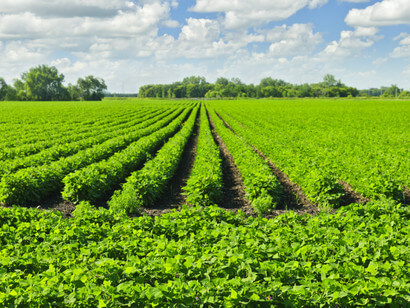
With fewer than one million inhabitants, Guyana meets 100% of its nutritional needs. Fertile agricultural land, abundant freshwater resources, and a strong connection between people and the soil enable the country to remain food-secure without relying heavily on imports.
Guyana proves that scale is not the determining factor; stewardship of land and water is.
Food Security: The Forgotten Measure of Real Wealth
This study reminds us of a fundamental truth often ignored in modern economics:
A nation’s real wealth is not measured only by GDP, but by its ability to feed its population, especially in times of global instability.
Before financial markets, industrial output, or digital economies, human survival depended on agriculture, water, and community knowledge. Societies that respected these foundations endured. Those who neglected them struggled.
Why This Matters to Conscious Travelers
At Sarah Tours, we believe travel should go beyond sightseeing. It should help us understand how people live, farm, share, and sustain themselves.
Across Morocco, Africa, Southern Europe, Latin America, and beyond, we meet communities whose resilience is rooted in:
• Traditional farming practices
• Seasonal food systems
• Respect for land and water
• Local knowledge passed through generations
These places teach us something modern systems often forget:
When everything stops, food becomes the first priority.
Travel as a Path to Understanding Sustainability
Responsible travel allows us to reconnect with essential truths:
• Where does our food come from?
• Who grows it?
• What happens when global systems fail?
By exploring agricultural regions, rural communities, and traditional food cultures, travelers gain a deeper understanding of food security, sustainability, and resilience.
Because to travel wisely today is also to learn how humanity can endure tomorrow.
Final Thought
When the world becomes uncertain, the land remembers.
And those who care for it will always have a future.
Keep exploring
Discover more stories from Morocco and beyond
Written by
Hamid Mernissi
I was born to travel the world. I am an anthropologist, a Sufi seeker and a student of life.
Comments
No comments yet. Be the first to share your thoughts!
Leave a comment