Troubadours Halqa in Morocco
The word Halqa simply means "circle." In practice, it was far more than a circle. It was an open-air theater, a classroom, a newspaper, a parliament, and sometimes even a ministry of information.
In 1876, as the United States celebrated the centennial of its independence with the grand Philadelphia Centennial Exhibition, one nation arrived carrying not the machinery of the Industrial Revolution, but the timeless elegance of an ancient civilization. That nation was Morocco.
The story most often told about Al-Busiri is itself a lesson in divine grace. Afflicted by illness and physical paralysis, he composed his celebrated ode in praise of the Prophet ﷺ and entrusted his suffering to Allah
For a long time, Morocco was home to millions of donkeys, and their presence extended beyond the domestic sphere. Trade in donkeys, particularly toward neighboring regions, formed a significant part of the rural economy, reminding us that value is not always found in what is celebrated but often in
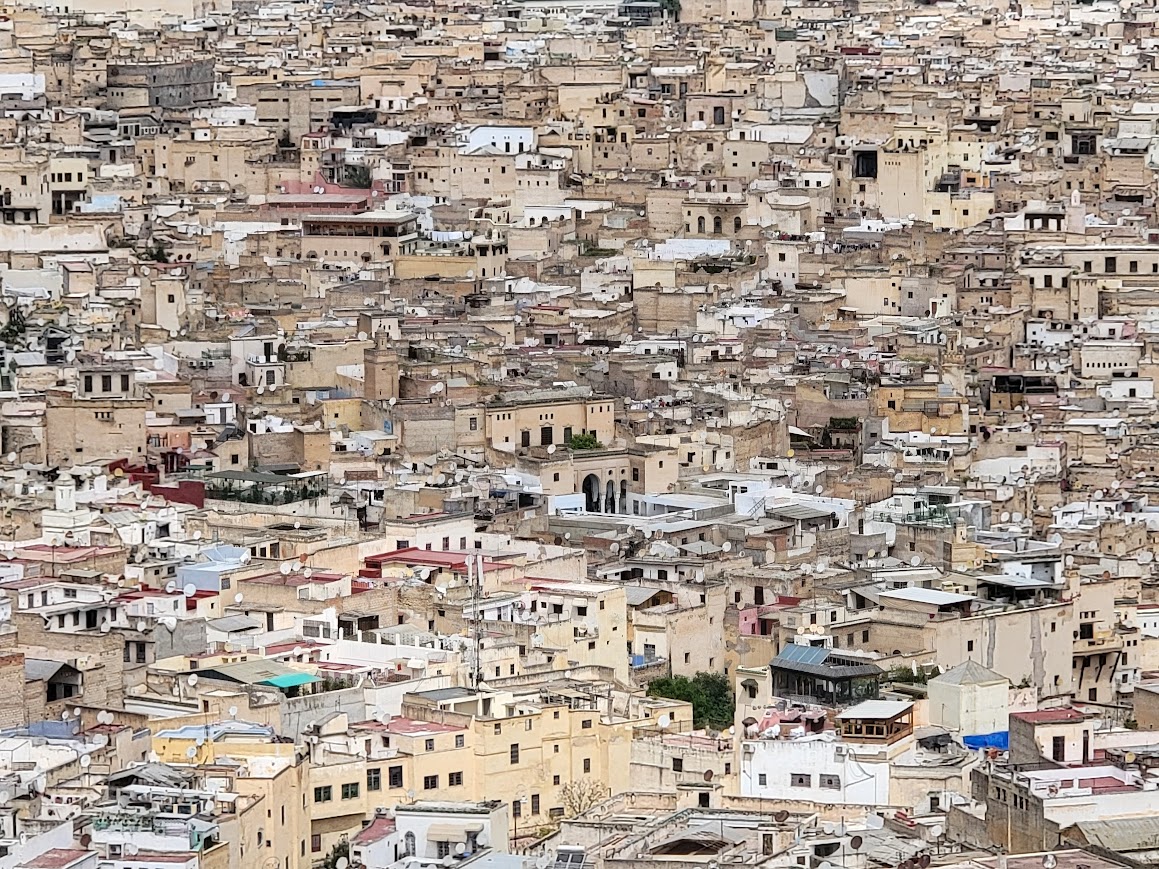
The memory of this transformation remains inscribed in the very geography of Fez. Neighborhoods such as Zqaq al-Rumman, with its orchards, and the broader Lamti quarters near Bab Guissa, still carry the imprint of that early presence.
In the memory of modern Morocco, independence is not recalled as a single event, nor as a simple transfer of power. It is understood as a process, one that unfolded through time, shaped by negotiation, sacrifice, and a particular reading of the world.
To stand at the grave of a righteous person, then, is not to step outside of Islam. It is to stand within a tradition that understands that faith is not only law and doctrine, but also memory, presence, and love.
At first glance, the act appears simple: travelers pausing to pray. Yet in a land such as Morocco, where space carries layered meanings, no gesture is ever entirely neutral. The question that arises is not only what was done, but how it was read, and why it resonated so deeply.
At the point where the Atlantic narrows into the Mediterranean, the Strait of Gibraltar becomes more than a passage. It becomes a condition. What moves through it, ships, ideas, encounters, does not simply pass by Morocco. It passes through the horizon of its existence.