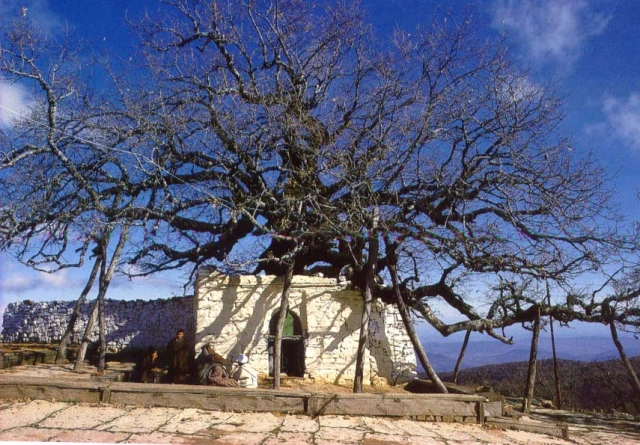
Offerings, Intention, and the Path of the Heart
Among scholars, questions have long been raised about what people do in the presence of graves, of saints, of those whose lives left a trace of light. Some spoke in categories, dividing intentions, measuring beliefs, drawing lines between what is permitted, what is disliked, and what is forbidden. And in doing so, they sought to protect the purity of worship. But the Sufi does not begin with the act. He begins with the heart. For him, the question is not only: What is being done? But rather: From where does it come? And toward whom does it return?
In every land of Islam, people gather. They come not only to places, but to meanings. They are in remembrance of God, of His Messenger ﷺ, of those who lived in devotion and left behind a fragrance of sincerity. Some bring food. Some bring money. Some offer what they can. And sometimes, an animal is slaughtered, not as an object of ritual alone, but as a way to feed, to share, to gather hearts around a table of remembrance.
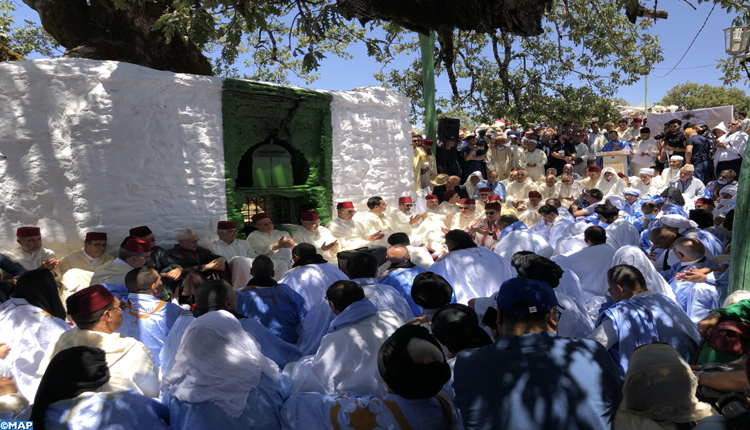
In North Africa, these gatherings became part of life. Retreats around the resting places of the righteous, moments where people step away from the noise of the world and return, if only briefly, to something quieter. The Sufi sees in this not the stone of the grave, but the trace of a life. A life that served, that gave, that remembered God until it became itself a reminder.
And this is what is sought: Not the person, but what passed through them. Not the body, but the baraka. Baraka is not owned. It is not contained. It flows from sincerity, from devotion, from lives that were given more than they were taken. And so, people come. Not to worship a creation, but to sit in the shadow of a life that pointed to the Creator.
The offering, then, is not in the form. It is in the intention. A piece of bread shared, a coin given quietly, a meal prepared for strangers, these are all forms of sadaqa. And in their essence, they are acts of continuity. They sustain a space, a path, a memory that still serves. But the Sufi remains aware. Always. Anything that turns the heart away from Allah is a veil. Anything that seeks from creation what belongs only to the Creator is a confusion. And in every age, there are those who forget this. Those who turn gestures into superstition, who replace meaning with illusion, who seek through forms what can only be received through sincerity.
The Sufi does not fight them. He returns to the center. To the remembrance that:
There is no giver but Allah.
No sustainer but Allah.
No reality but Allah.
And yet, he does not reject the gathering. He does not shut people out. Because he knows:
That sometimes, a simple gathering, a shared meal, a moment of pause, may be enough to soften a heart and return it to its origin. So, he allows the forms to remain, as long as they do not replace the essence. He honors the memory of the righteous, without confusing it with worship. He accepts the gesture but guards the intention.
For in the end, the path is simple: Everything begins with Allah, and everything returns to Him.
Keep exploring
Discover more stories from Morocco and beyond
Written by
Hamid Mernissi
I was born to travel the world. I am an anthropologist, a Sufi seeker and a student of life.
Comments
No comments yet. Be the first to share your thoughts!
Leave a comment