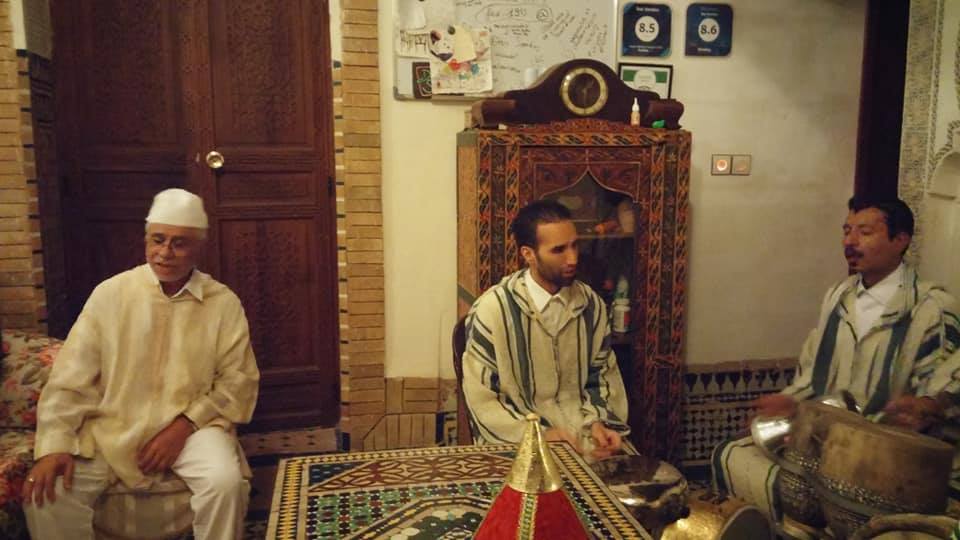
The Home I Found, the Door I Left Open
A Reflection on Faith, Love, and the Wisdom We Share
I was born into a home where God was never introduced to me as a stranger, and love was never explained to me as a doctrine.
God was already there, in the morning prayers, in the tenderness of my grandmother's voice, in the blessings exchanged between neighbors, in the bread shared with a stranger, and in the gratitude that accompanied even the smallest gifts of life.
I did not know that I was growing up in a world of Sufism. I knew only that I was loved, that life was sacred, and that we belonged to something greater than ourselves.
My grandmother, Lalla, was my first encounter with that mysterious world.
She did not sit me down to explain the philosophy of divine love. She lived it. Her devotion was not an argument to be won, nor a lesson to be memorized. It was present in the way she carried herself, the way she remembered God, and the tenderness with which she approached the world.
As a child, I understood very little of what she knew. But children have a remarkable ability to recognize love long before they learn to define it.
I received her teachings as naturally as the earth receives the rain.
Only much later did I discover that the world had given names to what I had experienced.
I encountered the great masters of Sufism: Rabi'a al-Adawiyya, al-Junayd, al-Ghazali, Ibn Arabi, and Dhul-Nun al-Misri, among many others. I read their teachings, contemplated their questions, and spent years trying to understand the relationship between the knowledge we acquire and the wisdom we live by.

I learned about ma'rifah, the experiential knowledge of God; about maqamat, the spiritual qualities cultivated through discipline; and about ahwal, those spiritual states that the heart cannot summon merely by wishing for them.
These discoveries opened new horizons before me.
Yet something curious happened as my studies deepened.
The more I learned, the more frequently my thoughts returned to the modest world of my childhood.
I would encounter an explanation of patience and remember someone who had practiced it without ever claiming to be patient.
I would read about gratitude and remember the simple blessings of our household.
I would contemplate divine love and find myself returning to Lalla.
It was as though the books were teaching me a language for something life had already whispered into my heart.
And slowly, I began to understand that there is a difference between knowing the meaning of a virtue and allowing that virtue to become part of one's character.
A person may speak beautifully about generosity and never give.
Another may have little to offer, yet divide his last piece of bread with someone who is hungry.
Who among them understands generosity?
Perhaps the first knows its definition. The second knows something of its taste.
The Sufis have a word for such tasting: dhawq.
It is a beautiful word, but it also carries a demanding lesson.
We cannot nourish ourselves merely by describing a meal. We must eventually taste it.
And perhaps we cannot become compassionate merely by admiring compassion. At some point, compassion must find its way into our actions.
This realization accompanied me through the years.
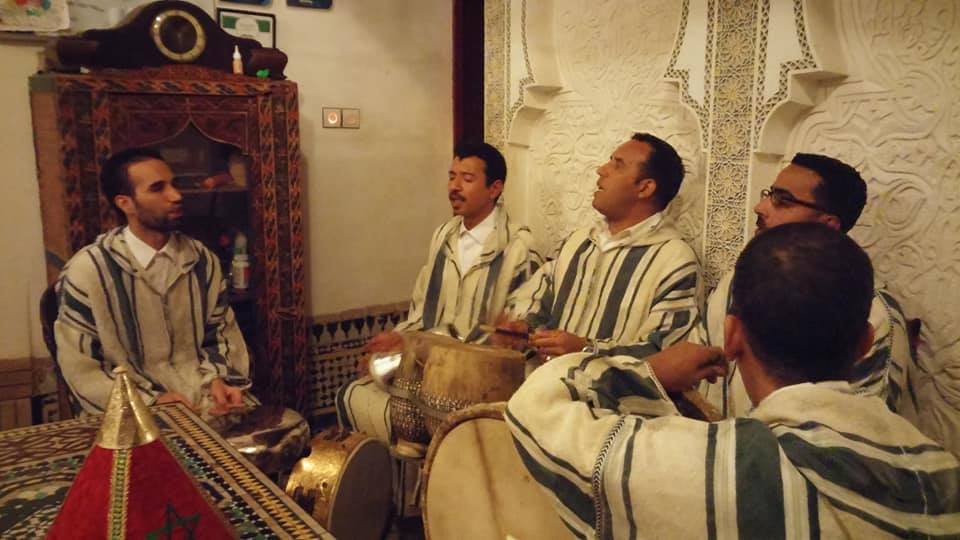
I traveled, studied, encountered people of different faiths and cultures, and discovered that human beings can disagree profoundly about the nature of God while recognizing many of the same virtues.
A mother comforting her frightened child does not first inquire into the theology of tenderness.
A stranger offering water to a thirsty traveler does not need to know the traveler's creed.
A person planting a tree may never know who will one day rest beneath its branches.
Yet these gestures carry meanings that human beings across cultures can recognize.
I do not say that all religions are the same, or that their teachings can be reduced to a collection of agreeable moral sentiments. Each tradition has its own history, understanding of existence, and relationship with the sacred.
My spiritual home is Islam, and Sufism has been my way of discovering its inward beauty.
I cannot separate that home from its foundations without losing something essential.
But I have also come to believe that a home does not become less itself when it welcomes a guest.
On the contrary, hospitality allows its warmth to be shared.
And this brings me to a question that has accompanied me increasingly as I have grown older.
What is the purpose of wisdom if we keep it entirely to ourselves?
What becomes of knowledge when it serves only to distinguish the learned from the unlearned?
What becomes of spirituality when it encourages us to withdraw into the satisfaction of our own spiritual accomplishments?
And what becomes of humility when we begin to imagine that our understanding places us above those who have traveled different roads?
I have no desire to make my life a model for others.
I have made mistakes, misunderstood people, defended opinions that later required reconsideration, and discovered weaknesses in myself that years of reading had not removed.
Spiritual practice has not made me immune to the ordinary contradictions of being human.
If anything, it has helped me recognize some of them more clearly.
There were times when I believed I had understood something, only to discover that I had understood its words but not yet learned to live its meaning.
And perhaps this is why humility has become so precious to me.
It allows us to remain students of life even when our hair has turned white and our bookshelves have become crowded.
It reminds us that the road is longer than our footsteps and that wisdom may appear in places where our pride would never think to look.
I have met people with little formal education whose generosity humbled me.
I have encountered strangers whose courage made me reconsider my own understanding of patience.
And I have discovered that a person who knows nothing about Sufism may nevertheless practice virtues that a lifelong student of Sufism still struggles to cultivate.
These encounters did not diminish my faith.
They invited me to examine it more deeply.
They reminded me that speaking of love is not the same as loving, and that proclaiming humility is not the same as being humble.
I do not believe Sufism possesses a magical solution to every human problem.
Our world needs knowledge, science, medicine, justice, responsible institutions, and the courage to confront suffering in its many forms.
But it also needs human beings willing to examine their intentions, govern their appetites, recognize the dignity of others, and understand that freedom without responsibility can become another form of captivity.
In its teachings on remembrance, gratitude, patience, self-examination, and love, Sufism has offered me ways of approaching these responsibilities.
It has not answered every question I have asked.
Sometimes it has taught me to ask better ones.
And perhaps that has been among its greatest gifts.
For many years, I thought that the purpose of learning was to accumulate understanding.
Today, I am more inclined to believe that learning should also transform the way we inhabit the world.
What use is my knowledge of gratitude if I cannot recognize the gifts that surround me?
What use is my understanding of patience if I cannot endure the imperfections of those I love?
What use is my devotion if it does not awaken compassion?
And what use is my search for God if it makes me forget my responsibilities toward His creation?
I do not ask these questions to examine anyone else's conscience.
I ask them because they continue to examine mine.
Perhaps that is why I have begun to think of Sufism less as a collection of teachings I must explain and more as a home whose doors I wish to keep open.
I was fortunate to enter that home as a child.
I inherited its warmth before I understood its architecture.
Later, I explored its rooms, studied its foundations, and discovered the wisdom of those who had helped build it over centuries.
But I am still learning how to live within it.
And now, when I look toward the world beyond its doors, I see travelers.
Some carry faith. Others carry doubt.
Some are wounded by life. Others are filled with wonder.
Some are searching for meaning. Others have found meaning elsewhere and simply wish to understand a different way of seeing.
I cannot know what each traveler needs, nor would I presume to tell anyone where his journey must end.
But I can offer hospitality.
I can share the wisdom that has nourished me, the questions that have challenged me, and the lessons that have helped me become a little more conscious of my own humanity.
I can tell the story of the home I found without insisting that it must become the home of everyone who visits.
And perhaps, in our conversations, I shall discover something from my guests as well.
After all, hospitality is not merely the art of giving.
It is also the grace of receiving.
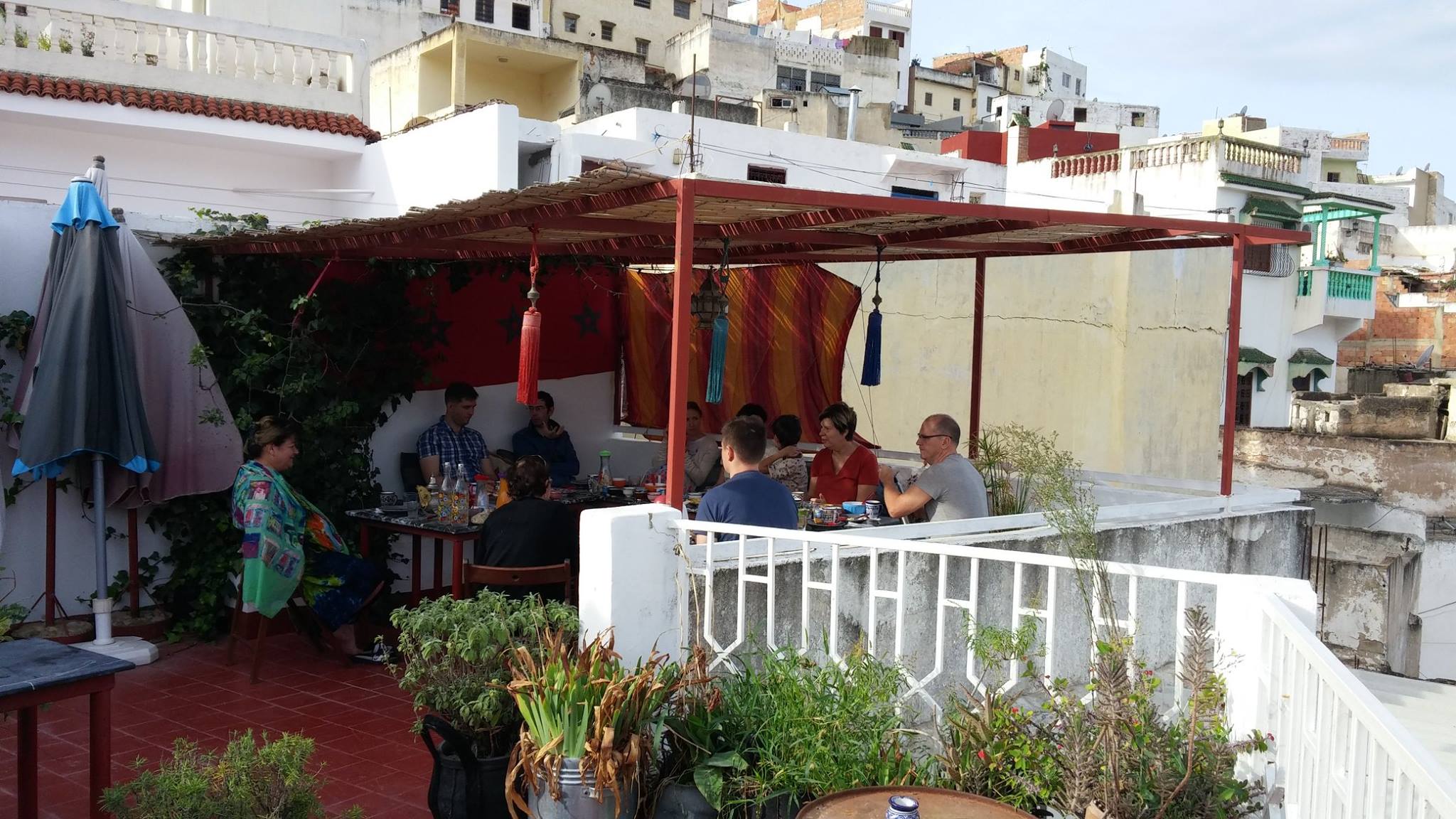
I think again of Lalla.
She is no longer here to explain what she intended to teach me. Yet the tenderness she planted in my childhood continues to bear fruit.
Perhaps she never imagined that her ordinary acts of devotion would travel so far, crossing languages, continents, and generations through the memories of a little boy who grew old.
And perhaps that is how some of life's most enduring lessons survive.
Not as monuments erected in our honor, but as seeds planted in the hearts of others.
We may never see the trees they become.
We may never taste their fruit.
But we plant nevertheless.
I have found a home in Sufism.
It has sheltered my questions, nourished my faith, challenged my weaknesses, and taught me that the pursuit of wisdom does not end when we discover how little we know.
I do not offer that home as the only place where truth, love, or meaning may be found.
I offer it because it has been generous to me.
And genuine generosity asks to be shared.
So, my fellow traveler, wherever you come from, whatever you believe, and whatever questions have brought you here, you are welcome to sit with me for a while.
We need not agree about everything.
We need not pretend to have answers to every mystery.
We may simply share what life has taught us, listen to one another, and perhaps discover something neither of us knew before.
I have found my home. Perhaps somewhere along our conversation, you may discover yours.
And if you do, I shall be grateful.
For a home that has taught me love would be a poor home indeed if I had learned nothing about welcoming others.
Come in, rest for a while.
The door is open.
Keep exploring
Discover more stories from Morocco and beyond
Written by
Hamid Mernissi
I was born to travel the world. I am an anthropologist, a Sufi seeker and a student of life.
Comments
No comments yet. Be the first to share your thoughts!
Leave a comment