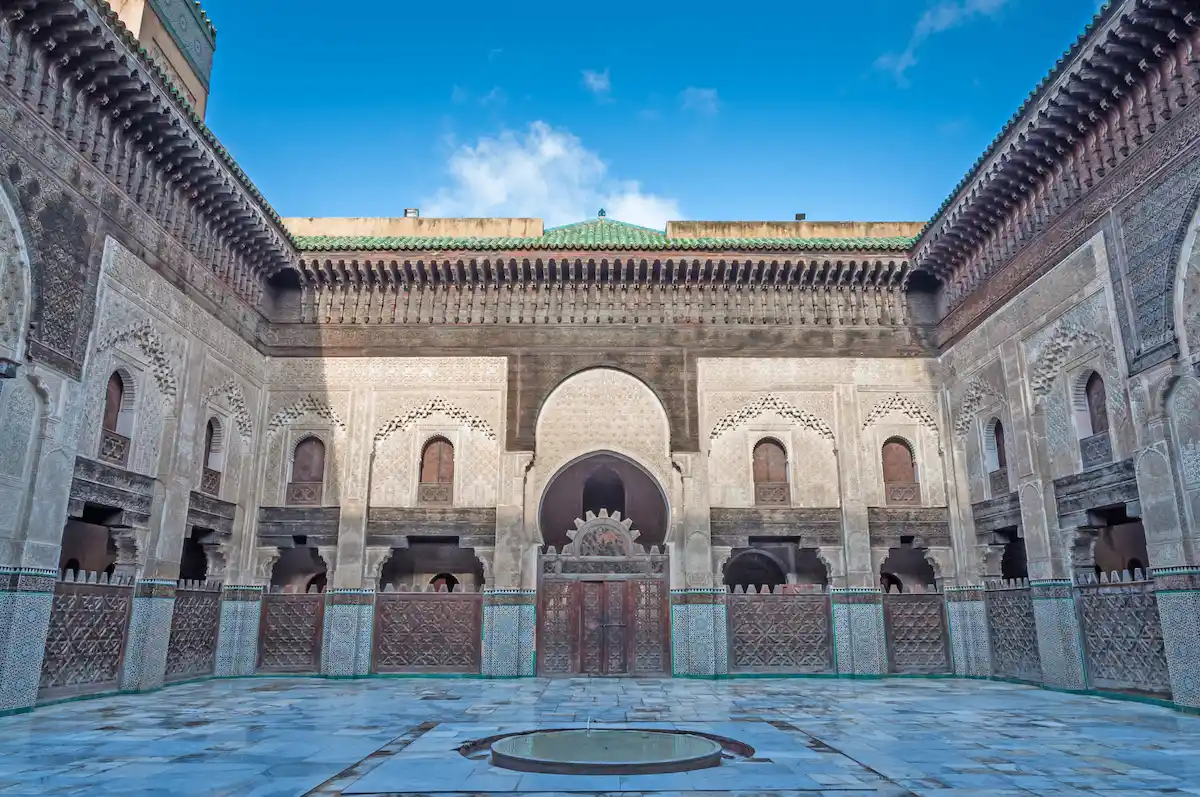
Fez: The City Sustained by Ceaseless Charity
What made Fez endure for more than twelve centuries, through dynasties and droughts, invasions and renewals, was not mere luck or geography. It was a heartbeat of generosity woven into its foundations: the Waqf, the inalienable charitable endowment in Islamic law.
Through the Waqf, land, homes, gardens, and even gold were dedicated to sustaining the city's spiritual, educational, and social life. A mosque, a fountain, a hammam, or a simple water trough for thirsty travelers, all could live eternally through this act of selfless devotion.
The Prophet Muhammad (peace be upon him) initiated the first Waqf when he built the mosque of Medina upon land gifted by the Banu Najjar. He declared the land sacred, beyond sale or purchase—so that it would forever serve the community. Omar ibn al-Khattab formalized this principle by devoting his fertile land of Khayber to the same purpose, ensuring the mosque and the Prophet’s household, Ahl al-Bayt, would always be sustained.
From this seed of faith, Waqf evolved into both a spiritual practice and a social institution, a living system through which the wealthy and the pious gave back to the community, caring for the poor, the traveler, the student, and the orphan alike. Islam transformed generosity into a conscious lifestyle, a balance of faith and fairness in society.
When Moulay Idriss II founded Fez, he did more than raise a city. As a descendant of Ahl al-Bayt, through his grandfather, Hassan ibn Ali, and Lady Fatima, the daughter of the Prophet, he inherited not only noble blood but also a sacred tradition. He carried with him the ethos of Waqf, ensuring that Fez would be built not on power but on piety, not on greed but on ceaseless charity.
For centuries, Waqf remained the unseen hand that fed and educated the people of Fez. Schools, mosques, and hospitals were all sustained by these endowments. Even the springs that gave the city its music of running water, the hammams that offered warmth and cleanliness, and the fountains where animals drank, all had their own Waqf.
It was an era when generosity was a guiding principle in daily life, wealthy women devoted portions of their jewelry to support widows and orphans. Endowments were made for debtors who could not pay, for the care of old mules and donkeys who once carried the city’s burdens, and even for birds and fish in the rivers that ran through the valley.
Fez thus became more than a city—it became a living example of how faith can sustain civilization. My father used to remind me of the Prophet’s words:
“When a person dies, his deeds end except for three: ceaseless charity, knowledge that benefits others, and a virtuous child who prays for him.”
Fez is the embodiment of that saying.
It is a city that has survived because its people believed in giving without measure, sustaining one another through love, duty, and divine devotion.
In the time of Waqf, there was no need for promises or politics, only the quiet, ceaseless work of good hearts.
Keep exploring
Discover more stories from Morocco and beyond
Written by
Hamid Mernissi
I was born to travel the world. I am an anthropologist, a Sufi seeker and a student of life.
Comments (1)
And here it is in a nutshell the heart sweetness loving kindness and all inclusiveness of Islam. The true Iman and submission to God's will that is its backbone. God is love and love is best expresses in waqf a concept of worship through action which benefits both the giver and receiver without humiliating the latter. It is silent it relieves suffering and meets basic needs of the entire creation around. It is one of the principles that brought me to Islam. No activism is necessary among people of good character good will good intention and good action. Selflessness sharing from one's gifts is crucial to one's own happiness and peace both here and in the afterlife
Leave a comment