Why Do We Burst into Hysterical Laughter at Funerals and During Tragedies?
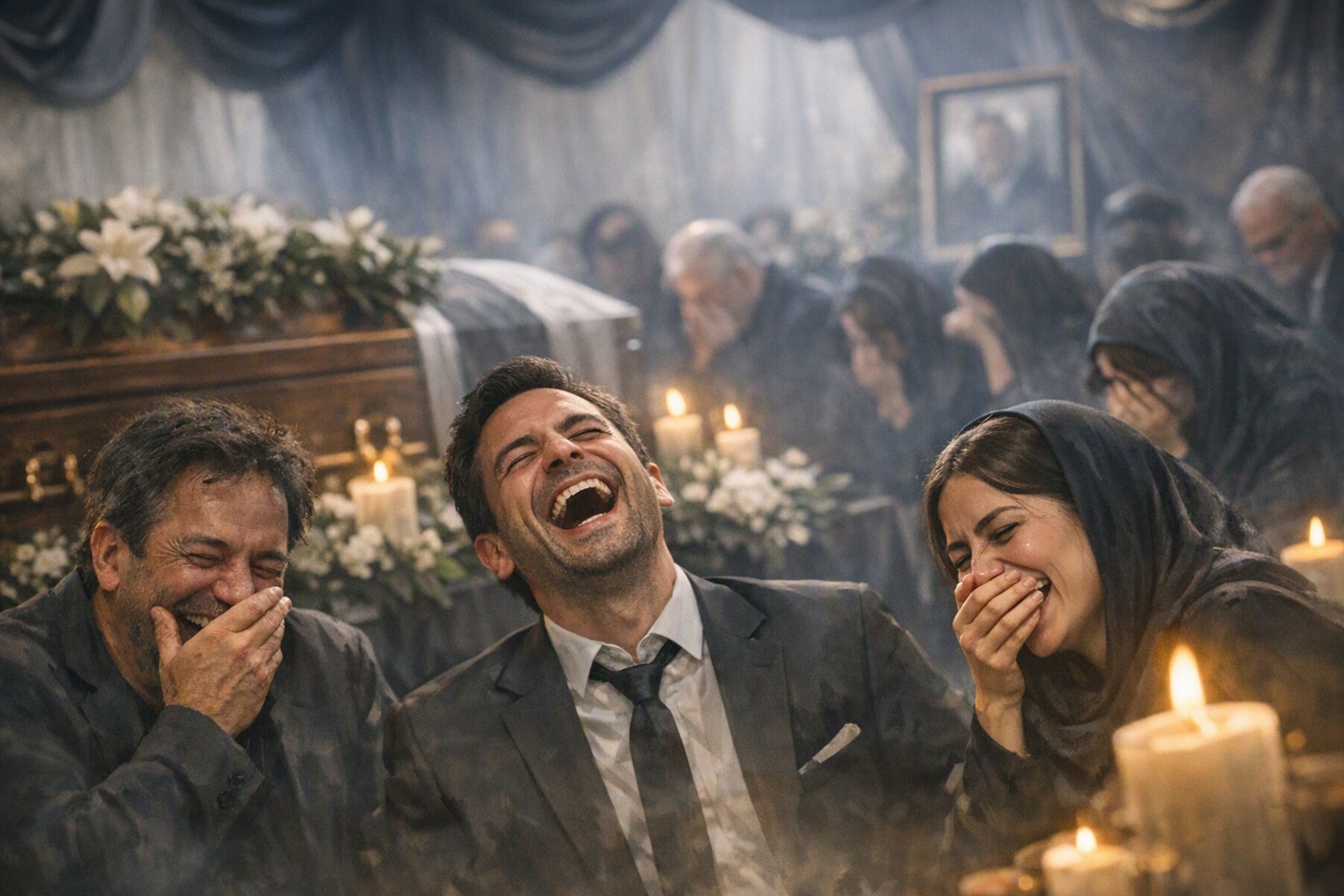
A person stands in a solemn funeral tent during a moment of farewell. Everyone's eyes are lowered in respect for the gravity and sadness of the occasion. Then, suddenly and for no obvious reason, a suppressed chuckle escapes their throat and quickly turns into an uncontrollable fit of laughter.
To an outside observer, this may seem deeply inappropriate or even morally insensitive. Yet behind this seemingly misplaced laughter lies a complex psychological process, one that offers a glimpse into the profound ways the human mind protects itself when it is on the verge of being overwhelmed.
Laughter as a Release Valve for Emotional Pressure
The roots of this paradox can be understood through the psychoanalytic concept of "psychic economy." According to Sigmund Freud, laughter functions as a mechanism for releasing accumulated psychological tension.
In a funeral or other tragic setting, a person must invest considerable emotional energy in maintaining composure, appearing solemn, and meeting social etiquette expectations. This emotional effort creates intense internal pressure.
At that point, even a minor trigger, such as someone stumbling, mispronouncing a word, or saying something unexpectedly odd, can crack the wall of self-control. The built-up emotional energy then escapes through the path of least resistance: laughter. In this sense, laughter acts as a release valve, restoring psychological balance before the mind becomes overloaded.
Laughing in the Face of Disaster
This phenomenon is not limited to funerals. Clinical observations have documented cases in which people suddenly laugh during moments of extreme danger, catastrophe, or even when confronted with the prospect of death.
In such situations, laughter serves as a psychological shield constructed by the ego, the part of the mind responsible for maintaining stability and self-preservation. Rather than allowing itself to be crushed by terror or grief, the mind uses laughter as a form of resistance.
Paradoxically, the laugh is not a sign that the person finds the situation amusing. Instead, it is the mind's way of declaring: "I refuse to be completely overwhelmed by this." By momentarily reframing the threatening situation, laughter reduces its emotional power and makes it more bearable.
A Philosophical Debate: Does Laughter Require Emotional Detachment?
This phenomenon has sparked debate among thinkers about the nature of laughter itself.
The French philosopher Henri Bergson argued that laughter requires a temporary "anesthesia of the heart", a brief suspension of emotion and sympathy. According to Bergson, people laugh when they observe something mechanical, absurd, or incongruous in human behavior, and this requires emotional distance.
If Bergson is correct, laughter during a tragedy becomes difficult to explain because tragic situations are saturated with powerful emotions.
Laughter as Protection Against Excessive Empathy
Psychologist William McDougall offered a different perspective. He argued that laughter did not evolve because emotions are absent; rather, it evolved as an antidote to overwhelming emotion.
McDougall suggested that if human beings genuinely absorbed the pain and suffering of everyone around them, they would become emotionally exhausted. To prevent this, the mind developed protective mechanisms, one of which is laughter.
From this viewpoint, laughter interrupts the chain of emotional contagion. It creates a small psychological distance between the individual and the suffering they are witnessing, protecting them from constant emotional depletion and breakdown.
What Hysterical Laughter Really Means
Fits of laughter in serious, tragic, or highly stressful situations are often expressions of the mind's instinct for psychological survival. Rather than revealing disrespect, they may reveal the extraordinary flexibility of the human brain.
When despair, fear, or grief threaten to overwhelm us, the mind sometimes reaches for humor, not because the situation is funny, but because humor can keep us afloat when we are in danger of sinking beneath the weight of our emotions.
In this sense, laughter at a funeral is less a failure of decorum than a reminder of the remarkable ways the human psyche struggles to preserve itself under stress.
Keep exploring
Discover more stories from Morocco and beyond
Written by
Hamid Mernissi
I was born to travel the world. I am an anthropologist, a Sufi seeker and a student of life.
Comments
No comments yet. Be the first to share your thoughts!
Leave a comment