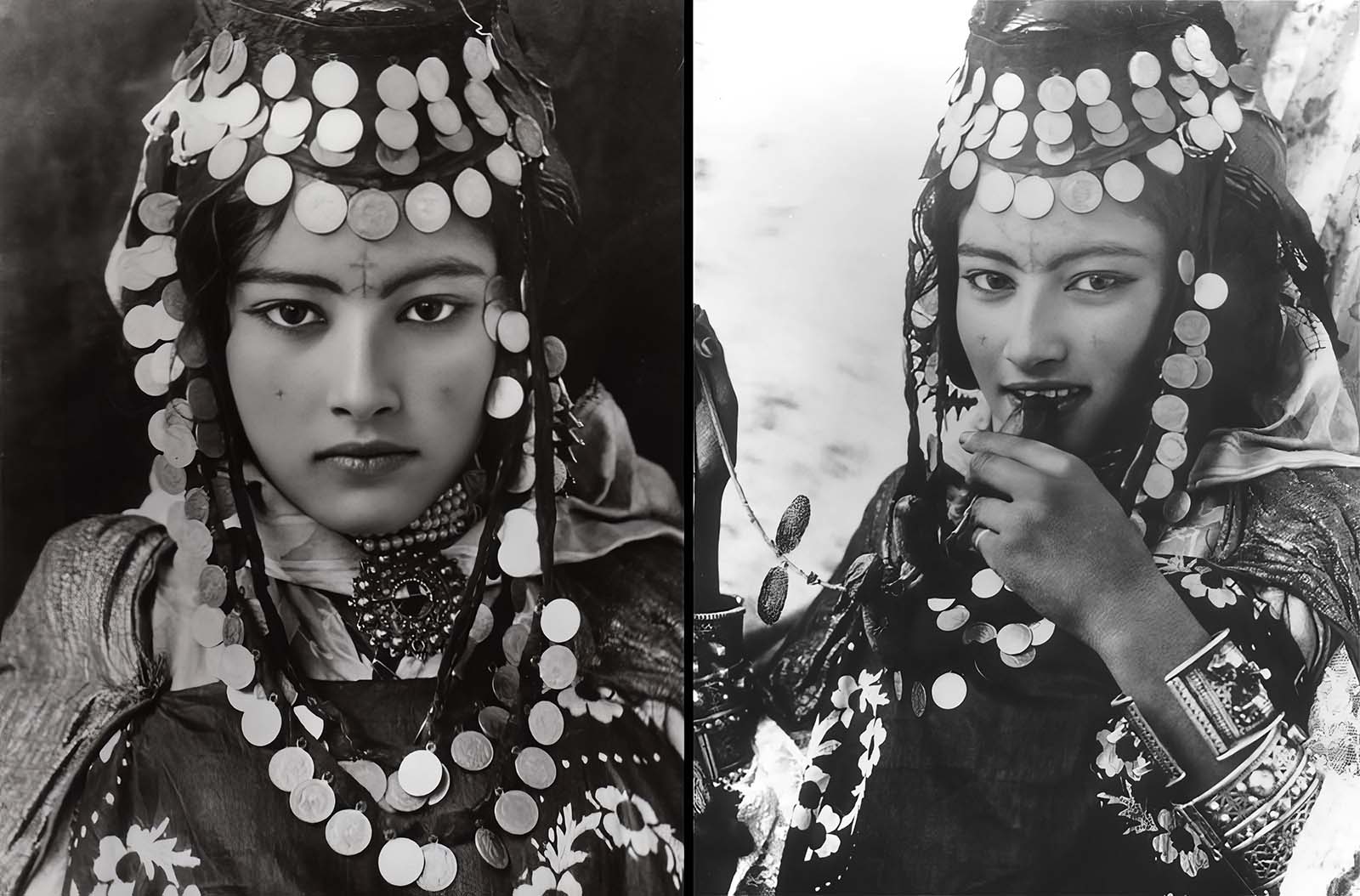
Oulad Naïl: Between Landscape, Tradition, and Transformation
The Oulad Naïl are known to inhabit the eastern regions of present-day Algeria, particularly along the lower ranges of the Jebel Naïl and the plains of the Amour. Traditionally, they have lived as nomads and semi-nomads, drawing their livelihood from pastoralism, weaving, and the rhythms of a land both vast and austere. Their origins remain a matter of interpretation. Some trace their lineage to Arab tribes who arrived with the Banū Hilāl migrations, while others see in them a deeper continuity with the Berber populations of North Africa. Their physical features, rituals, and cultural patterns suggest not a single origin but a layered identity shaped by time, movement, and encounter.
Among the peoples of the Maghreb, the Oulad Naïl have long been associated with the striking presence of their women, both in beauty and in character. They are often described as independent, expressive, and marked by a certain freedom that distinguishes them from neighboring groups. One of the most discussed aspects of their culture is the tradition of the Nayliyyats Bracelet, in which young women, upon reaching puberty, leave their home regions and travel to Saharan oases. There, over a period of 10 to 15 years, they work as dancers and entertainers, accumulating wealth in cash, gold, and jewelry.
This period of mobility and earning is not without structure. Contrary to simplistic interpretations, these young women are not isolated individuals. They often move within organized groups, accompanied by older women, mothers, aunts, or other experienced figures who guide, supervise, and manage the group's social and economic life. In some cases, there are also some male musicians and a group leader, often referred to as a Sheik, who oversees the movement and organization of the troupe. These groups travel across regions, particularly in remote or marginal areas, offering performances and receiving payment in various forms, sometimes cash, often goods.
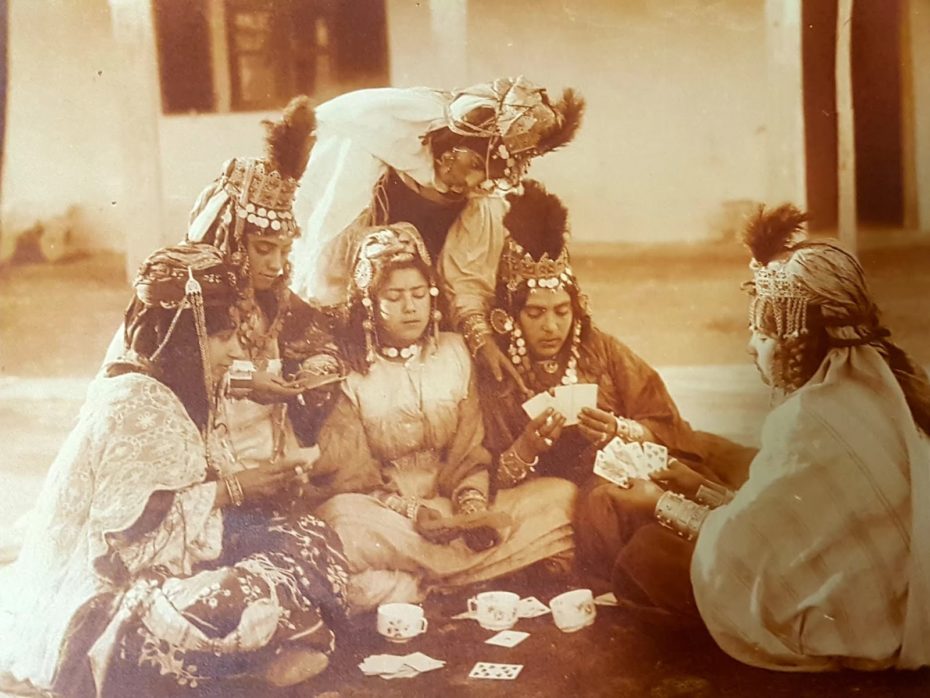
The artistic dimension of this tradition is central. From a young age, girls are trained in music and dance, developing a refined vocabulary of movement that includes shoulders, hips, and torso, accompanied by rhythm and presence. Their appearance reflects both identity and artistry: vibrant garments, intricate jewelry often adorned with coins, henna-dyed hands and feet, and, at times, facial tattoos marking life transitions. Beauty here is not incidental—it is cultivated, performed, and embedded within a cultural framework.
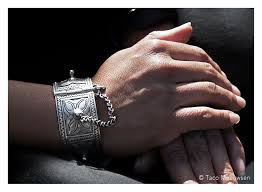
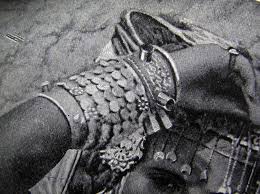
When this phase ends, the women return to their home regions. One of the symbolic gestures of this return is the crafting of a distinctive bracelet—often called the bracelet of Oulad Naïl, that marks a transition. It signifies readiness for marriage, for settlement, and for a different form of social responsibility. These women are often regarded as desirable partners, not only for their adornment or experience, but for their economic independence and their ability to contribute materially to family life.
From an internal perspective, this tradition has been understood as a form of cultural and economic autonomy. Women were not merely dependents; they were agents capable of generating their own wealth and returning with resources that strengthened the household and, by extension, the community. In regions marked by aridity and limited opportunity, such practices can also be read as strategies of survival, shaped by necessity as much as by culture.
At the same time, this tradition raises questions, questions that cannot be ignored. The young age at which this journey begins, the exposure to environments where performance and attraction are central, and the absence or limited role of immediate male kin during this period all invite reflection. Field observations suggest a more complex social structure than idealized descriptions often present. The presence of intermediaries, group leaders, and traveling circuits introduces layers of organization that blur the line between autonomy and vulnerability.
Historically, outsiders, particularly during the colonial period, were quick to reduce this tradition to forms of prostitution. Such interpretations, however, flatten a far more complex reality. While it would be inaccurate to dismiss transactional relationships entirely, it would be equally reductive to ignore the social, economic, and cultural frameworks within which these practices evolved. It may be more accurate to understand this phase as a lived school of experience, where young individuals, both women and men within these environments, encounter the realities of social relations, exchange, and survival.
Today, the context is changing. Economic transformations, migration opportunities, and the pull of urban centers, both within North Africa and toward Europe, have begun to reshape traditional patterns. Yet, the legacy of the Oulad Naïl endures. Elements of this tradition persist, sometimes adapted, sometimes reinterpreted, and in certain cases extending beyond their original geographic boundaries.
What remains is not a fixed identity, but a reflection of how communities adapt to landscape, scarcity, and opportunity. The story of the Oulad Naïl is not only about a people, but it is also about how culture negotiates survival, how individuals navigate freedom and constraint, and how meaning is carried across generations, even as the world around them changes.
When this phase of mobility comes to an end, the return is not silent. It is marked, recognized, and celebrated. The young woman does not come back as she left. She returns with her earnings, her experience, and a new standing within her community. Upon her arrival, a ceremony often takes place, at the heart of which is the crafting of a silver bracelet by a local smith. This bracelet, distinctive to the Oulad Naïl, carries more than aesthetic value. It is an emblem of a journey completed, a sign that the period of earning and movement has fulfilled its purpose. It also marks a transition: from mobility to settlement, from independence to integration, and from youth into readiness for marriage. In this gesture, the community acknowledges not only what has been acquired materially but also what has been achieved socially, a passage into a new role as a woman prepared to build a household and accept those who may seek her hand.
The Nayliyyāt bracelet becomes an emblem of a lived experience, of a journey fulfilled and a duty completed. It is not merely an ornament, but a quiet declaration of passage. Worn daily, it reflects maturity, responsibility, and a new place in the community's fabric. It speaks without words: that the bearer has crossed a threshold, gathered her share of life, and returned prepared to assume her role with dignity.
Keep exploring
Discover more stories from Morocco and beyond
Written by
Hamid Mernissi
I was born to travel the world. I am an anthropologist, a Sufi seeker and a student of life.
Comments
No comments yet. Be the first to share your thoughts!
Leave a comment