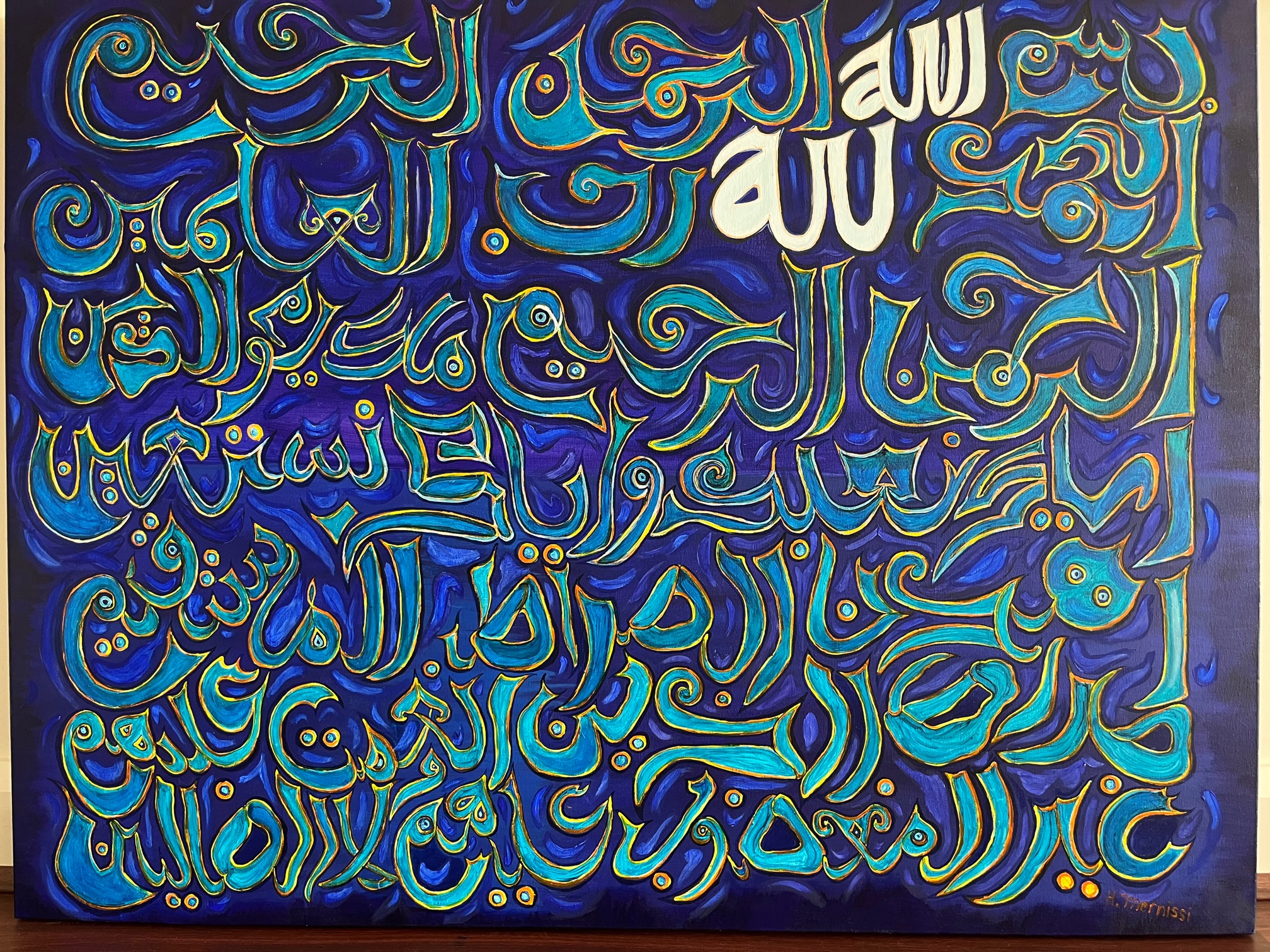
Dhikr: A Discipline of Consciousness
Few spiritual practices have been repeated more consistently throughout history than dhikr, the remembrance of God. To some, it appears to be little more than the repetition of sacred words. To others, it is the very heartbeat of the spiritual journey. The difference lies not in the words themselves, but in how we understand remembrance.
Human beings are always remembering something.
Some remember their fears.
Others remember their ambitions.
Some remember past wounds.
Others remember success, wealth, recognition, or disappointment.
Whatever occupies our remembrance gradually shapes the person we become. The mind follows what it repeatedly contemplates, and the heart slowly takes the form of what it continually embraces.
The Sufis understood this long before psychology became an academic discipline.
They asked a simple but profound question:
What happens when remembrance itself becomes directed toward God?
This question changes everything.
Dhikr is not merely the repetition of words. It is a discipline of consciousness.
Its purpose is not simply to pronounce the Divine Names, but to allow those Names to reshape the inner landscape of the person who remembers.
If ordinary language can comfort, encourage, wound, or transform us, why should sacred language not possess its own order of influence?
A single sentence can restore hope to a despairing heart.
A mother's voice can calm a frightened child.
A poem can move an entire nation.
Language already possesses power.
The Sufis simply asked whether words revealed through revelation, and the Divine Names themselves, might touch dimensions of the human being that ordinary language rarely reaches.
Today, psychology teaches us that attention influences emotion and behavior. Neuroscience continues to explore how repeated attention, meaningful repetition, and intentional practice can reshape patterns within the brain. We increasingly recognize that what we repeatedly think about influences how we perceive ourselves and the world around us.
The Sufis would not have been surprised.
For centuries, they taught that the heart becomes what it remembers.
Dhikr was never understood as an escape from reality. It was a way of returning to reality by freeing the heart from becoming imprisoned by fear, anger, pride, greed, or despair.
This does not reduce dhikr to psychology, nor does it confine it to theology.
It is both a spiritual practice and a human discipline.
The believer sees it as a remembrance of God.
The psychologist may see it as disciplined attention.
The neuroscientist may study changes in the brain that accompany sustained contemplative practice.
Each perspective observes the same practice through a different window.
Perhaps wisdom does not ask us to choose one window over another.
Perhaps it simply invites us to look through all of them.
The purpose of dhikr is not to escape the world.
It is to become fully present within it.
A heart that remembers God becomes less occupied with itself.
Less driven by fear.
Less imprisoned by pride.
More capable of compassion.
More capable of gratitude.
More capable of balance.
Perhaps that is why the Qur'an reminds us:
"Surely, in the remembrance of God do hearts find tranquility."
Whether we approach this spiritually, psychologically, or scientifically, the invitation remains the same.
Remember well.
For what we remember, we gradually become.
Keep exploring
Discover more stories from Morocco and beyond
Written by
Hamid Mernissi
I was born to travel the world. I am an anthropologist, a Sufi seeker and a student of life.
Comments
No comments yet. Be the first to share your thoughts!
Leave a comment