Everyone Has a Fez
Why I Wrote The Boy from Fez
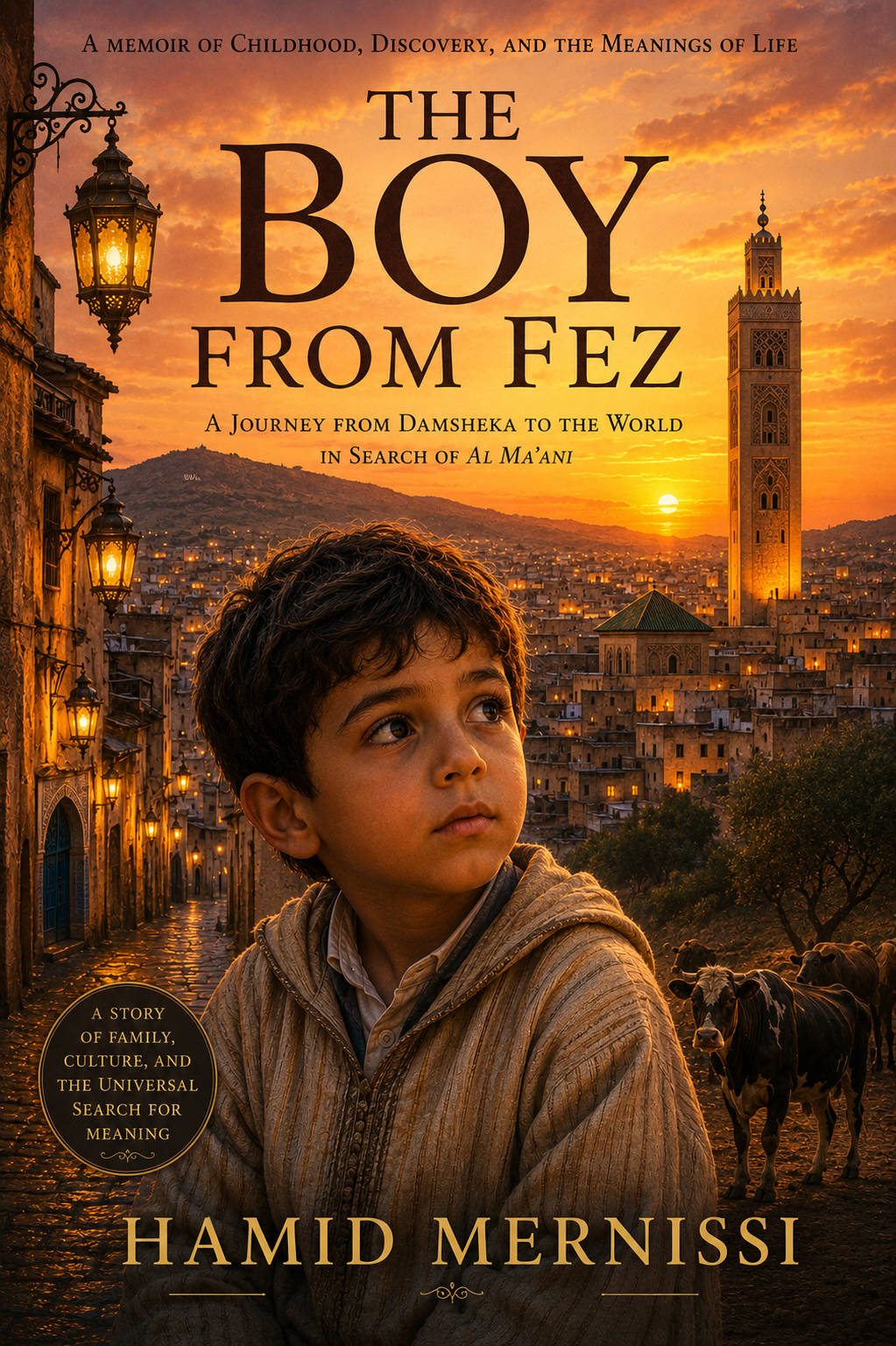
My new memoir, The Boy from Fez, will be published on October 15, 2026.
I have wondered how I should announce it.
I could tell you that it is a book about my childhood in Fez, Morocco. I could describe its chapters, its people, its houses and streets. I could tell you about the city in which I was born and the family that raised me.
All of that would be true.
But it would not tell you why I wrote the book.
I wrote The Boy from Fez because I began to understand that when people disappear, entire worlds can disappear with them.
Not the great events recorded by historians. Those usually survive.
I mean the smaller things.
The way a grandmother held a child's hand.
The smell coming from a kitchen before noon.
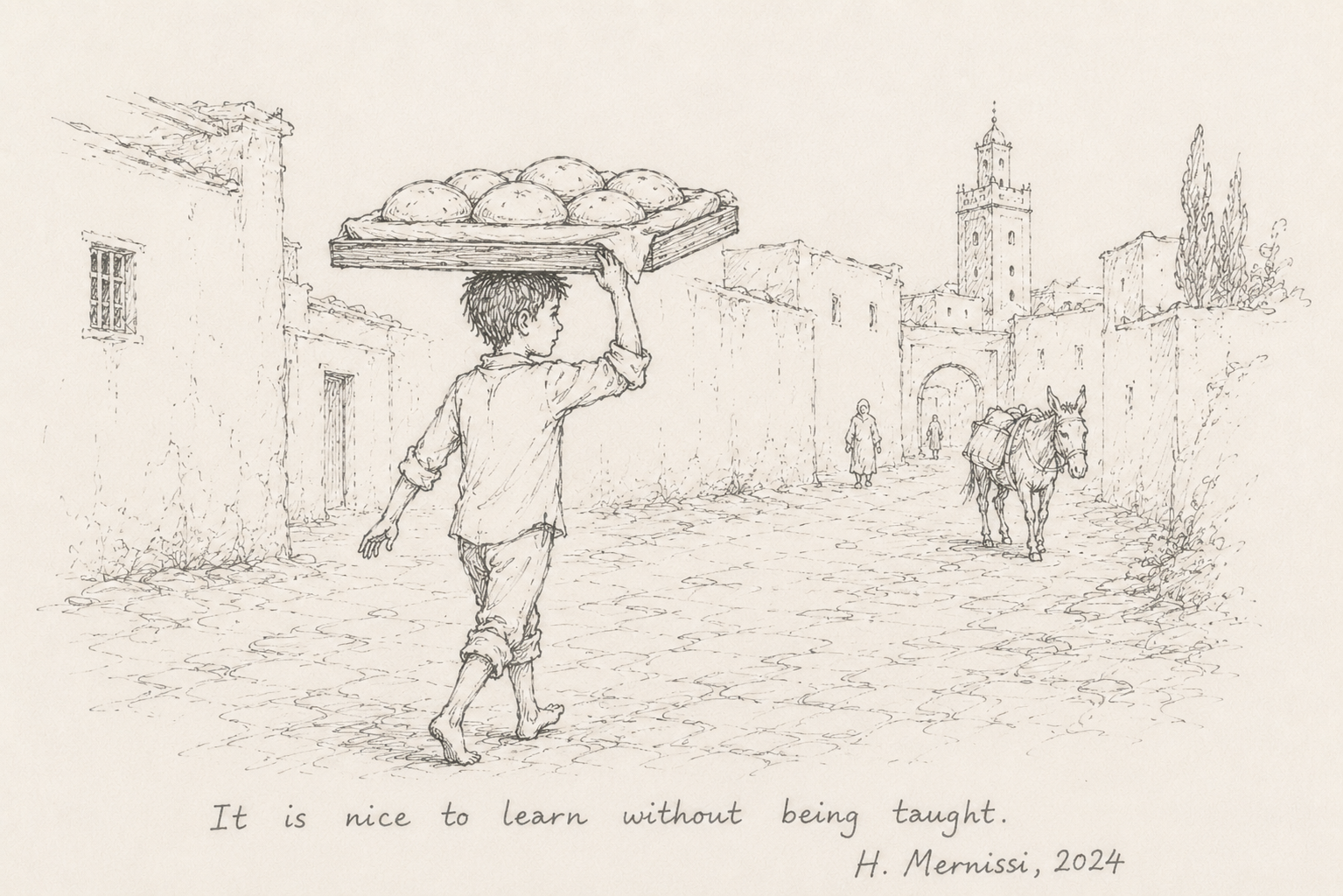
The baker who knew every family in the neighborhood.
The voice of the water carrier in the street.
The sound of a door opening.
A proverb repeated so often that nobody remembered who first said it.
The particular silence of a house in the afternoon.
The rituals around a meal.
The songs women sang while working.
The way people greeted one another.
The stories children heard before they were old enough to understand that one day they would become the custodians of those stories.
These things rarely enter history books.
Yet perhaps they are the things from which we are made.
The Fez I Carry
I was born in Fez, one of the world's ancient cities, but The Boy from Fez is not primarily about monuments.
The Fez I wanted to preserve was alive.
It had voices.
It had fragrances.
It argued.
It laughed.
It prayed.
It cooked.
It traded.
It celebrated.
It mourned.
Its wisdom did not live only in libraries or mosques. It lived in kitchens, workshops, courtyards, markets and conversations. It lived in craftsmen's hands and grandmothers' sayings. It lived among people whose names will never appear in history books but without whom there would have been no history worth remembering.
Among them was my grandmother, Mi Lalla.
As a little boy, I often experienced Fez while holding her hand.
I did not know then that she was teaching me.
Children rarely know when they are being formed.
We simply walk beside those we love.
Only much later do we discover that their voices have somehow become part of our own.
I travelled far from that little boy. I crossed countries and continents. I encountered other cultures, languages, religions, landscapes and ways of understanding the world.
Yet the farther I travelled, the more I understood something strange:
The boy had come with me.
Fez had come with me.
Everyone Has a Fez
But while writing this book, I discovered something I had not expected.
Fez does not belong only to me.
Everyone has a Fez.
Your Fez may not have ancient walls or narrow alleys.
It may be your grandmother's kitchen in Sicily.
A village in India.
A neighborhood in New York that no longer exists.
A farmhouse somewhere in Australia.
A courtyard in Andalusia.
A childhood in Senegal.
It may be the smell of bread your mother baked, the tree you climbed as a child, a schoolyard, a song, a father's expression, an old neighbor, a family table around which people once gathered.
Sometimes Fez is not even a place.
It may simply be the sound of a mother's voice you have not heard for thirty years.
We all come from somewhere.
And that somewhere continues living within us long after geography has carried us elsewhere.
This is why I have not written The Boy from Fez to tell readers that my childhood was more beautiful than theirs, or that the past was better than the present.
I have no desire to compete with the present.
I wanted only to remember.
And perhaps by remembering my Fez, I might awaken yours.
I shared my Fez to revive theirs.
That, more than anything, became the purpose of this book.
A Gift to My Daughter
This book also carries a different meaning for one reader.
My daughter, Asia.
She was born and raised in America, in another country, another culture and another generation.
She knows the man who became her father.
But I wanted to leave her a way of meeting the boy who existed before him.
I wanted her to know the houses that sheltered him, the grandmother whose hand he held, the parents and family who formed him, the streets he walked, the beliefs he inherited and questioned, the people whose kindness remained with him, the mistakes, laughter, customs, songs and silences from which her father slowly emerged.
Not because she must become any of these things.
Her life belongs to her.
Her identity belongs to her.
I ask nothing from her.
The Boy from Fez is simply a gift waiting on a shelf.
She can open it whenever she wishes.
Perhaps I will be sitting beside her when she does.
Perhaps I will not.
That is one of the reasons we write.
A human voice eventually becomes silent.
A written voice can wait.
Years from now, she may open the book and find a little boy waiting there.
And perhaps he will take her hand and say:
Come. Let me show you where your father came from.
Why We Remember
Writing this memoir has taught me that remembrance is not the same as nostalgia.
Nostalgia sometimes wants yesterday back.
I don't.
Yesterday had its hardships, injustices, fears and limitations. I would not exchange the possibilities of today merely to recover the world of my childhood.
But neither do I believe that progress requires forgetting.
We can walk forward while occasionally turning our heads toward those who helped us reach the road.
That is what The Boy from Fez has allowed me to do.
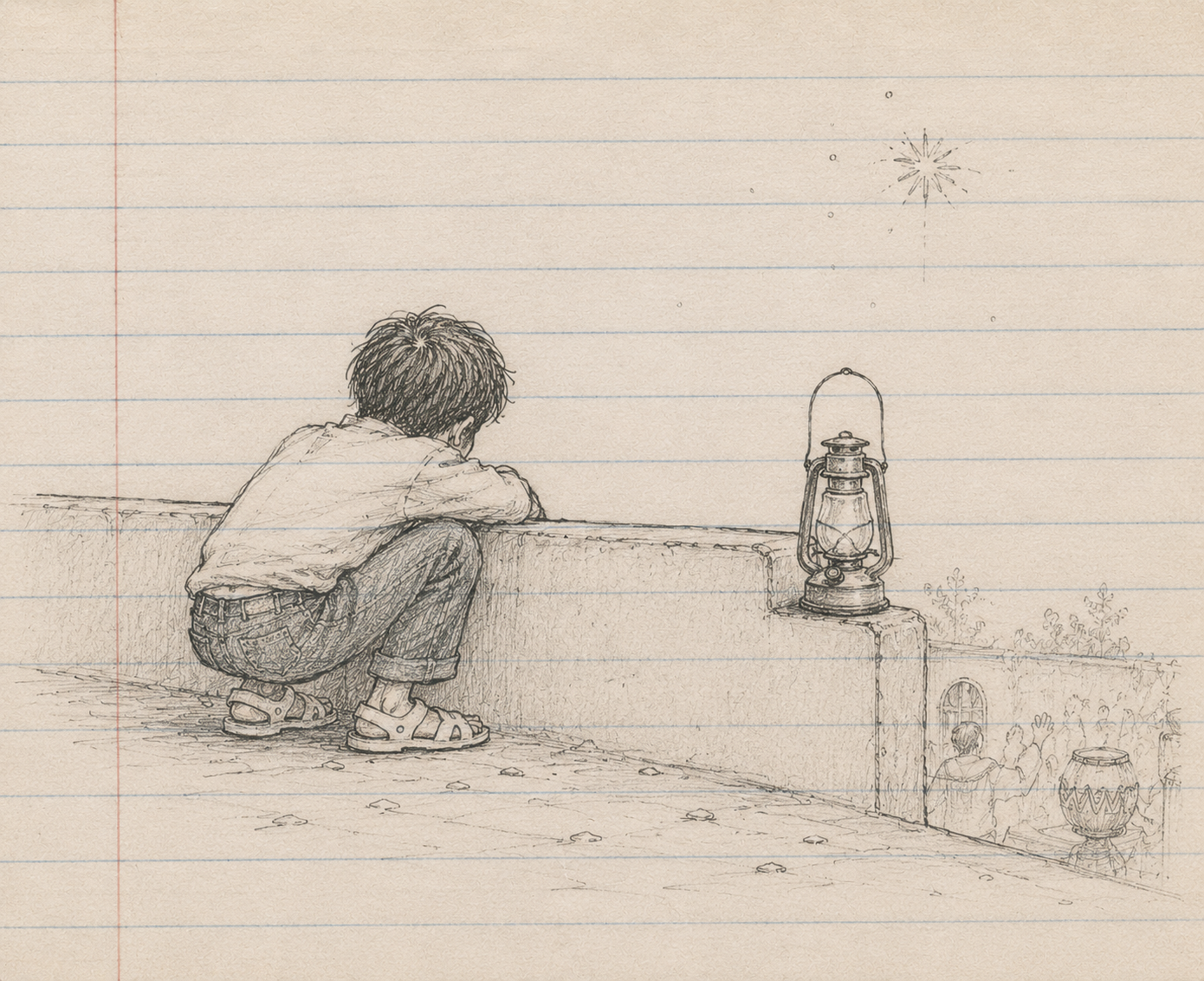
I turned around.
And there they were.
Some had been gone for decades.
Yet while I wrote, they returned.
Mi Lalla returned.
The houses opened their doors.
The neighborhood began making noise again.
Someone was baking bread.
Someone was calling from another room.
Someone was telling a story I had almost forgotten.
For a few hours each day, through the strange mercy of memory, the vanished became present.
Perhaps that is another reason human beings tell stories.
Not to defeat death.
But to refuse to let love disappear without leaving a trace.
An Invitation
On October 15, I will send The Boy from Fez into the world.
After that, the book no longer belongs entirely to me.
Every reader will bring something to it that I could never have written.
His grandmother.
Her father.
Their childhood.
Their street.
Their kitchen.
Their losses.
Their laughter.
Their Fez.
And perhaps somewhere, someone will close the book one evening and suddenly remember something that has not visited them for fifty years.
A face.
A fragrance.
A voice.
A hand.
If that happens, then the little boy from Fez will have accomplished what I hoped he might.
I shared my Fez so that you might remember yours.
Everyone has a Fez.
Where is yours?
Keep exploring
Discover more stories from Morocco and beyond
Written by
Hamid Mernissi
I was born to travel the world. I am an anthropologist, a Sufi seeker and a student of life.
Comments
No comments yet. Be the first to share your thoughts!
Leave a comment