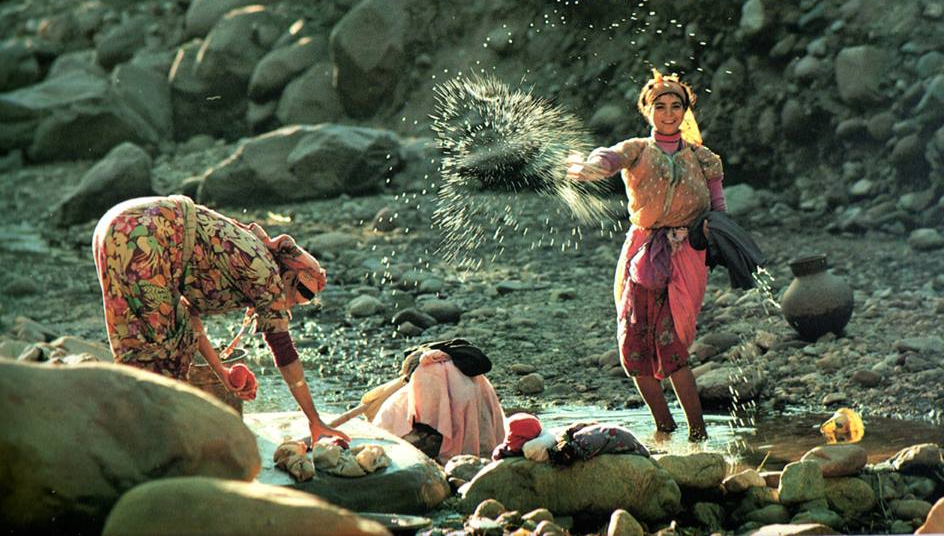
The Ait Sghrouchen
Lineage, Memory, and the Weight of Origin
In the folds of the Middle Atlas Mountains, where land rises in quiet strength and memory settles into stone, the Ait Sghrouchen stand as one of the enduring tribes of the Zenata Amazigh world. Their presence is not only geographical but also genealogical, historical, and deeply embedded in the long continuity of North African identity.
They belong to the great Zenata confederation, a vast Amazigh lineage whose branches have spread across the Maghreb, carrying both mobility and resilience. To speak of the Ait Sghrouchen is therefore not only to name a tribe, but to enter a network of affiliations that reach back into the earliest formations of Amazigh society.
Their lineage, as transmitted through traditional genealogies, traces a long and intricate chain: Ali ibn Amr ibn al-Qasim ibn Abd al-Wad ibn Yadin ibn Muhammad ibn Wurtajn ibn Zarjik ibn Wasin ibn Jana ibn Madghis ibn Mazigh. In this chain, names are not merely markers of descent, they are anchors of memory, each one carrying the echo of a generation that lived, moved, and shaped the land.
Yet genealogy, in the Maghrebi context, is rarely a simple matter of record. It is also a space of interpretation, of claim, and at times of aspiration. Some traditions have sought to link al-Qasim to the Idrisid lineage, thus associating the tribe with the prophetic descent that has long held symbolic authority in Morocco. But this view does not stand uncontested.
Ibn Khaldun, with his characteristic rigor, rejected the Idrisid attribution and affirmed instead that al-Qasim was of Zenati origin, belonging to the Banu Abd al-Wad. For him, this was not a minor correction, but a restoration of historical coherence. In his reading, the Ait Sghrouchen emerge not as an offshoot of Arab nobility, but as an authentic expression of the Zenata world.
Other scholars approached the question differently. Al Zayyani, in his work Tuhfat al-Hadi al-Mutrib, identifies the Sghroushnis as the descendants of Ali ibn Amr, thereby reinforcing the tribe's internal genealogical continuity. Meanwhile, Ahmad ibn al-Hasan al-Sab‘i, drawing on a wide range of classical sources, including the writings attributed to Abd al-Rahman al-Qayrawani and Al-Suyuti, reintroduces the Idrisid connection, situating al-Qasim within a different genealogical horizon.
Between these positions, one begins to see not contradiction, but the layered nature of identity itself. In the Maghreb, lineage is not only a matter of blood but also of belonging, prestige, and how communities understand themselves within the wider world.
Returning to Ibn Khaldun's testimony, we find a broader framework that helps situate the Ait Sghrouchen more firmly. In Al-‘Ibar, he traces the Banu Abd al-Wad to Yadin ibn Muhammad, placing them among the early branches of the Zenata alongside tribes such as Tujin, Musab, and Zardal. Their ancestry extends further back to Razjik ibn Wasin ibn Warsik ibn Jana, placing them within the deep Amazigh lineage that ultimately traces back to Mazigh himself, the symbolic ancestor of the Amazigh people.
Within this structure, the Banu al-Qasim are among the principal branches. Known among the Zenata as Ait al-Qasim, they carried the characteristic kinship marker “Ait,” signifying descent and collective identity. It is from this branch that the Ait Sghrouchen trace their origin, through Ali ibn Amr, whose name remains central to their genealogical memory.
Even here, the narrative is not without nuance. Ibn Khaldun himself notes that the claim of Idrisid descent among the Banu al-Qasim rests largely on collective agreement rather than verifiable evidence. At the same time, he acknowledges the internal subdivisions of the group, including the Banu Ali, while Yahya ibn Khaldun adds the sons of Amr as another branch, an observation that aligns closely with the lineage attributed to the Ait Sghrouchen.
What emerges from this layered reading is not a single, fixed origin, but a convergence. The Ait Sghrouchen stand at the intersection of memory and history, of assertion and documentation. Their genealogy, whether read through Ibn Khaldun’s critical lens or later scholarly elaborations, consistently points to a Zenati foundation rooted in the Banu Abd al-Wad.
And perhaps this is where the deeper meaning resides.
Beyond the precision of lineage, what persists is continuity, the transmission of identity across generations, carried not only through names but also through land, language, and shared belonging. In the Middle Atlas, where the Ait Sghrouchen continue to inhabit their ancestral spaces, genealogy is not merely recalled; it is lived.
Keep exploring
Discover more stories from Morocco and beyond
Written by
Hamid Mernissi
I was born to travel the world. I am an anthropologist, a Sufi seeker and a student of life.
Comments
No comments yet. Be the first to share your thoughts!
Leave a comment