The Almost-Vanished Golden Age of Overland Travel
How a teenager in Fez discovered travel, anthropology, and a philosophy that would eventually become Sarah Tours
Sometimes we choose our profession.
Sometimes our profession chooses us.
Tourism entered my life almost by accident, long before I imagined that one day I would create Sarah Tours, travel across continents, study anthropology, or spend a lifetime thinking about what it really means to travel.
I was still a teenager in high school in Fez.
One morning, I woke up and prepared to go to school as usual. When I stepped outside, I discovered two cars camped near the entrance to our family farm.
One was a beautiful Citroën DS carrying a well-off young French couple—what we would then have called hippies. The other was the unmistakable little Citroën 2CV, with two young men travelling in it.
They had simply arrived.
There was no reservation.
No reception desk.
No online review telling them where to stay.
They were travellers.
We welcomed them.
That encounter became a friendship that lasted for years.
I did not know it that morning, but travel had just knocked on my door.
When Our Farm Became a Campground
This was the late 1960s and early 1970s, an extraordinary period in independent travel.
Young Europeans were crossing borders in cars, vans, campervans, trailers, old buses, and whatever vehicles could survive the journey. Volkswagen campers seemed to be everywhere.
Travel was slower then.
Perhaps because it was slower, encounters lasted longer.
Somehow, word began to circulate among young travellers passing through Fez that there was a farm near Ben Tato where they could camp.
The directions were wonderfully simple:
“Go there and ask for Hamid. He is a generous young guy.”
And so our farm gradually became an unofficial free campground.
Nobody designed it as a tourism project.
There was no business plan.
There was simply space, hospitality, curiosity, and the pleasure of meeting people who had travelled from places I knew mostly from maps and books.
They wanted to know Morocco.
I wanted to know the world.
We met somewhere in between.
From Practising Languages to Becoming a Guide
Then another coincidence occurred.
At a surprise party, I met an old acquaintance from my neighbourhood who had become a student guide.
He began encouraging me to accompany visitors through the Medina of Fez.
At first, my motivation was simple: I wanted to practice my French and improve my English.
Then I discovered I could also earn a little pocket money.
More importantly, I discovered that I enjoyed it.
My high-school teachers soon learned that I was good at showing people around Fez. When relatives or friends came from France to visit them, they would sometimes ask me to take their guests through the city.
I knew history well.
But I also knew Fez in another way.
I knew its streets.
I knew its neighbourhoods.
I knew its people.
I knew which alley led where, who worked behind which door, how people spoke to one another, where craftsmen gathered, and how the city changed from one hour of the day to another.
I knew Fez, as we say, like my pocket.
Without realizing it, I was learning one of the first lessons of guiding:
Knowing facts about a place is not the same as knowing the place.
The Strange Trucks at Bab Khokha
Then something appeared that fascinated me.
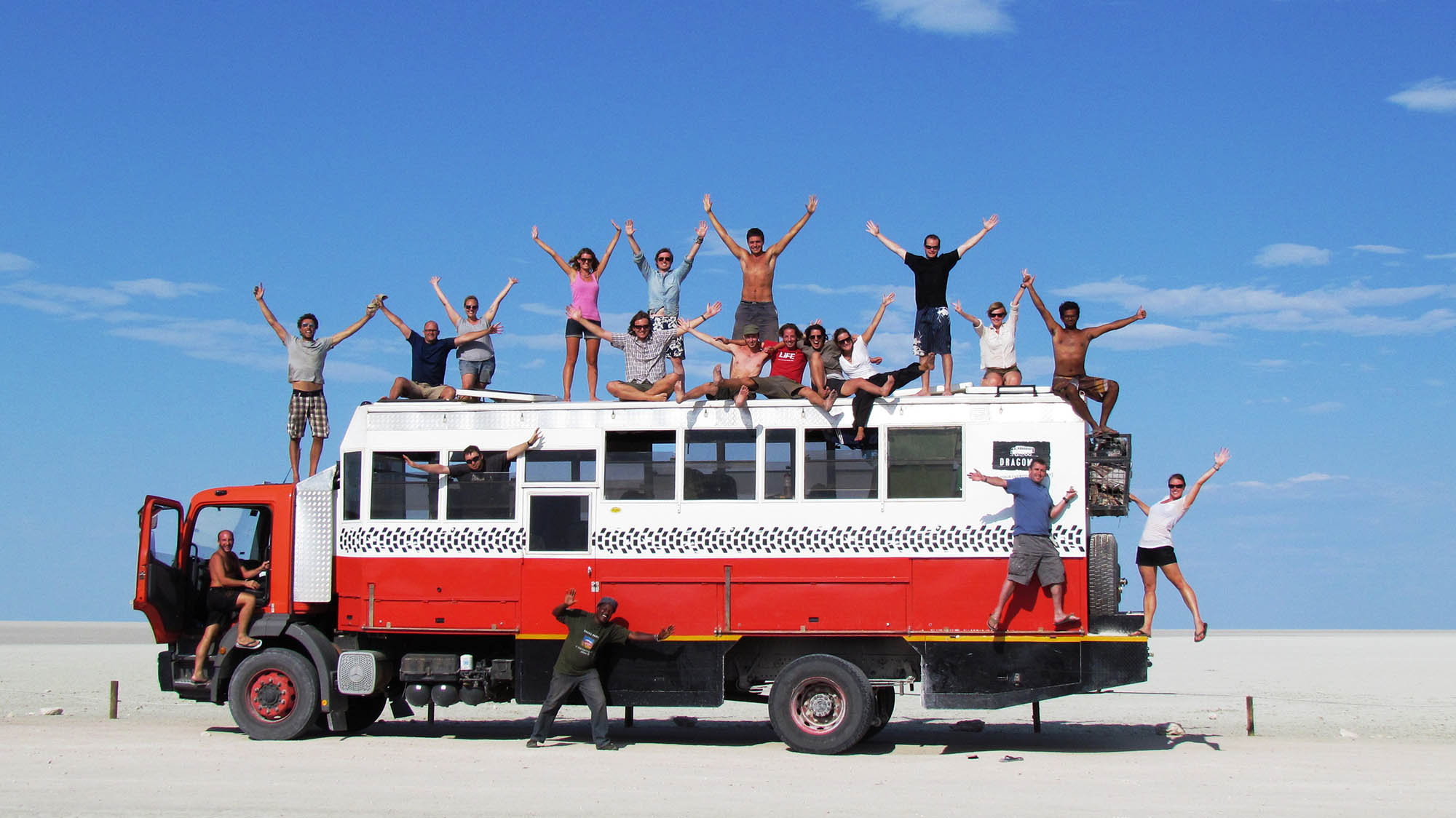
Near my high school, Moulay Rachid, there was a parking area at Bab Khokha. Beginning around the early 1970s, I started noticing unusual vehicles arriving there.
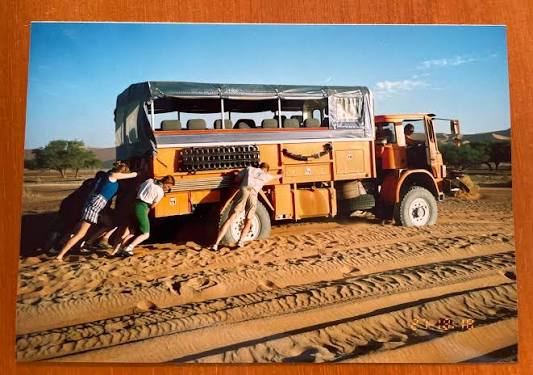
They were high off the ground, rugged, almost military-looking trucks.
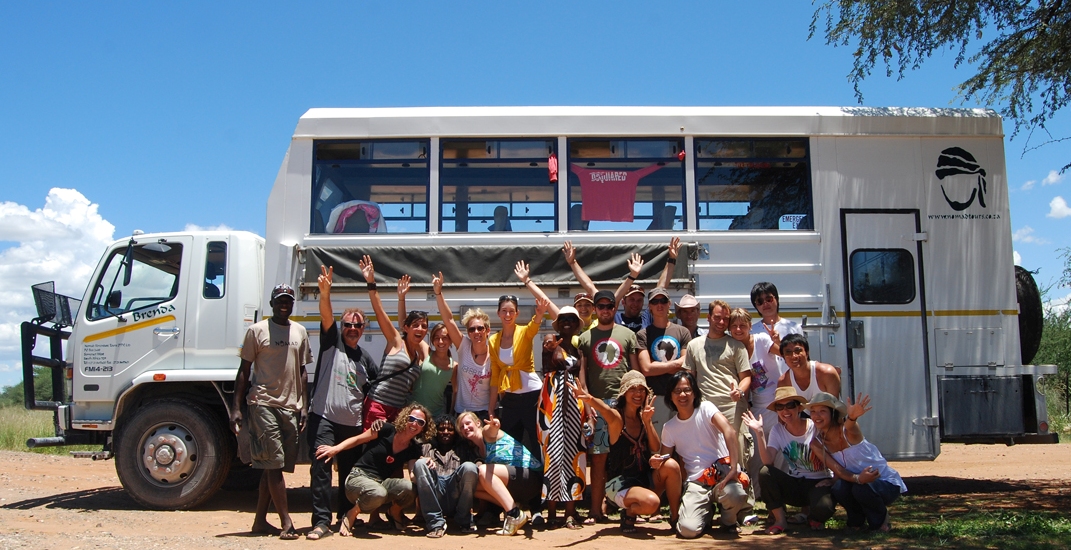
They came mainly from Britain and northern Europe, carrying small groups of perhaps fifteen to twenty-five young travellers.
These were not the conventional tourists arriving in air-conditioned coaches and staying in luxury hotels.
These people were crossing countries.
Sometimes continents.
Some of the overland routes of that era stretched from Britain through Europe, North Africa and Asia, and eventually toward Australia and New Zealand.
I would stand near those trucks and stare at them.
And I dreamed.
One day, I thought, I am going to travel in one of those vehicles.
At first, I became acquainted with two Moroccan guides who worked with these groups, Ghali and Aziz.
They encouraged me.
“Learn English,” they told me.
“When several trucks arrive at the same time, come and help us.”
So I did.
I remember names from that remarkable overland era—Guerba, Sundowners, Insight, Capricorn, Contiki, and later Topdeck, among others. Some were British, some Australian, and perhaps some American. At the time, I was less interested in where the companies were registered than in those extraordinary trucks arriving at Bab Khokha carrying young travellers who seemed to have crossed half the world.
These companies were part of a very different tourism culture.
You carried your life with you.
You camped.
You cooked.
You crossed borders.
You broke down.
You repaired things.
You got lost.
You met people.
And somehow the difficulties became part of the journey.
1974: Becoming a Guide
In 1974, I passed the examination of the Moroccan Ministry of Tourism and became an officially licensed local guide in Fez.
I had found my world.
Most guides naturally preferred conventional tourism: luxury hotels and organised coach groups arriving from France, Spain, Italy, Germany and elsewhere.
There was nothing wrong with that kind of travel.
It simply wasn't me.
I loved camping.
I loved walking.
I loved mountains.
I loved sitting around a fire.
I loved the informality of the young overland travellers.
Their clothes were casual. Their expectations were different. They were curious, adventurous and usually willing to accept a little discomfort in exchange for discovery.
Perhaps because I felt comfortable with them, they felt comfortable with me.
Soon I was no longer merely guiding them through Fez.
They began asking me to travel with them throughout Morocco.
The teenage boy who had once stood at Bab Khokha staring at those enormous trucks was suddenly riding in them.
I Wasn't Showing Them Morocco
This period taught me something that has remained with me throughout my life.
I never felt that I was showing Morocco to tourists.
That language never felt right.
I was sharing my culture with fellow travellers.
There is a difference.
If I stand in front of you and lecture, I am the guide and you are the tourist.
But if we walk together, something else happens.
You ask questions.
I ask questions.
You discover my country.
I discover something about yours.
We eat together.
We become tired together.
We laugh.
Sometimes we disagree.
Sometimes the vehicle breaks down and everyone has to help.
The distinction between host and guest begins to soften.
That was the kind of travel I loved.
I wanted travellers beside me, not behind me.
I did not know the academic vocabulary for any of this yet.
I had not studied anthropology.
But I was already practising it.
Anthropology Before University
Eventually I worked extensively with Capricorn and travelled far beyond Morocco.
North Africa opened into the rest of the continent.
Journeys that began as two-week adventures became expeditions lasting months. Some tours extended as long as thirty-two weeks.
Imagine what happens when you travel with people for thirty-two weeks.
You don't simply visit countries.
You live together.
You encounter borders, languages, food, illness, generosity, misunderstandings, landscapes, villages, cities, celebrations and unexpected acts of kindness.
Every day becomes fieldwork.
Every meal becomes cultural exchange.
Every roadside stop becomes an anthropology lesson.
Years later, I returned to university and formally studied anthropology.
But in some ways the road had reached the classroom before I did.
Overland travel taught me anthropology before I knew to call it anthropology.
The university gave me theories and methods for understanding experiences I had already been living for years.
Sarah Tours
Time passed.
I travelled.
I studied.
Eventually I earned my PhD.
Yet something inside me remained unsettled.
The road kept calling.
In 1994, I finally answered it by creating my own company in Alexandria, Virginia.
I called it Sarah Tours, after my wife and my daughter, who both carry the name Sarah.
But although the company was new, its philosophy was already decades old.
It had begun at our farm outside Fez.
It had grown in the narrow streets of the Medina.
It had climbed aboard those strange overland trucks parked at Bab Khokha.
And it had travelled with me across Africa.
Overland journeys, hiking, trekking in the Atlas Mountains, Sahara expeditions, camping, discovery and active travel naturally became Sarah Tours specialties.
That was where I found my energy.
That was where I felt alive.
What Travel Used to Mean
I was fortunate to experience an era when travel still contained a large element of uncertainty.
We did not always know exactly where we would sleep.
We could not consult a smartphone before entering a village.
There were no online ratings telling us whether an encounter was worth having.
We travelled to discover.
Of course, tourism has changed enormously since then, and many of those changes have made travel safer, more accessible and more comfortable.
But something valuable can also be lost when travel becomes merely another commodity.
When every encounter is packaged, every minute scheduled, every experience priced and every destination reduced to something to consume, we risk forgetting why human beings travelled in the first place.
Travel can be a business.
Sarah Tours is a business.
Guides, drivers, hotels, cooks, artisans and suppliers deserve to earn a dignified living from their work.
But travel should never become only a business.
There must remain curiosity.
Respect.
Fairness.
Wonder.
Human encounter.
Responsibility toward the places we visit.
And enough humility to remember that when we enter another person's country, village or home, we are guests before we are customers.
Call Me Old-Fashioned
Perhaps I am old-fashioned.
If so, I accept it gladly.
I want to preserve something of the spirit of travel that first found me in the narrow streets of Fez.
Not the discomfort for its own sake.
Not nostalgia for old trucks or broken roads.
The spirit.
The willingness to discover.
The willingness to walk.
The willingness to listen.
The willingness to accept that the person we meet along the road may be as important as the monument we travelled thousands of kilometres to see.
That spirit has guided my life.
And as long as I remain involved with Sarah Tours, I want it to guide the company.
I hope Sarah Tours will outlive me.
Perhaps someday another young guide will inherit something from what we have learned.
Perhaps another traveller will discover that the purpose of crossing a border is not simply to arrive somewhere else, but to understand another human being a little better.
If that happens, then the legacy will have been worthwhile.
I entered tourism almost accidentally as a teenager.
More than half a century later, I realise that tourism did not merely give me a profession.
Travel educated me.
It introduced me to anthropology.
It introduced me to the world.
And, strangely enough, the farther it carried me from Fez, the more deeply it taught me to understand where I came from.
So call me old-fashioned.
I will continue travelling this way for as long as I can.
And I will continue believing that the best journey is not one in which a guide walks ahead and tourists follow behind.
The best journey is the one in which we walk beside one another.
Long live responsible travel.
Long live sustainable travel.
Long live ethical travel.
And above all, long live the simple human curiosity that makes us leave home, cross a border, meet a stranger—and return understanding our shared world a little better.
Keep exploring
Discover more stories from Morocco and beyond
Written by
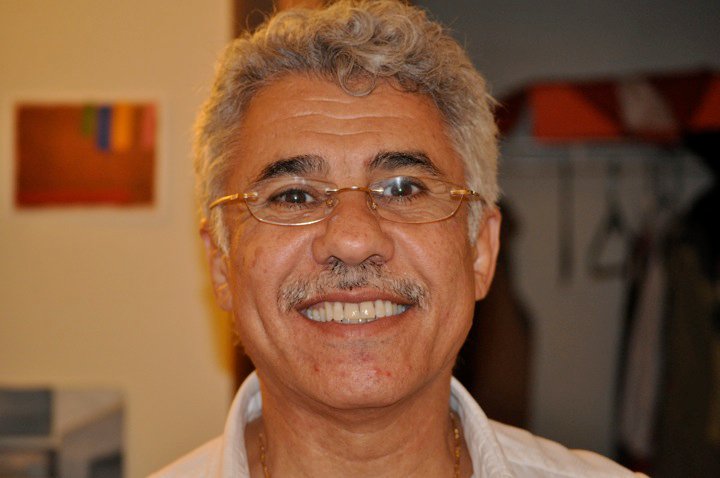
Hamid Mernissi
I was born to travel the world. I am an anthropologist, a Sufi seeker and a student of life.
Comments
No comments yet. Be the first to share your thoughts!
Leave a comment