The House of the Sick
On the Birth of Care in the Islamic World
Islam did not come as a religion alone. It came as a way of being in the world, a way that seeks to restore balance, dignify life, and care for all that exists on the earth. Not only for believers, but for all creatures. The human, animal, and even the vegetal world is held within a vision in which existence itself is entrusted, not owned.
From its earliest expression, this vision extended beyond worship into the fabric of daily life. Social order, economic fairness, and the preservation of life were not separate concerns. They were part of the same breath. Care, then, was not charity. It was a responsibility.
Within this understanding, health was not a privilege, nor a favor offered to the weak. It was a right embedded in the very idea of the Umma, a community not defined by strength or wealth, but by mutual responsibility. The sick were not to be assisted occasionally; they were to be cared for fully, continuously, and without distinction.
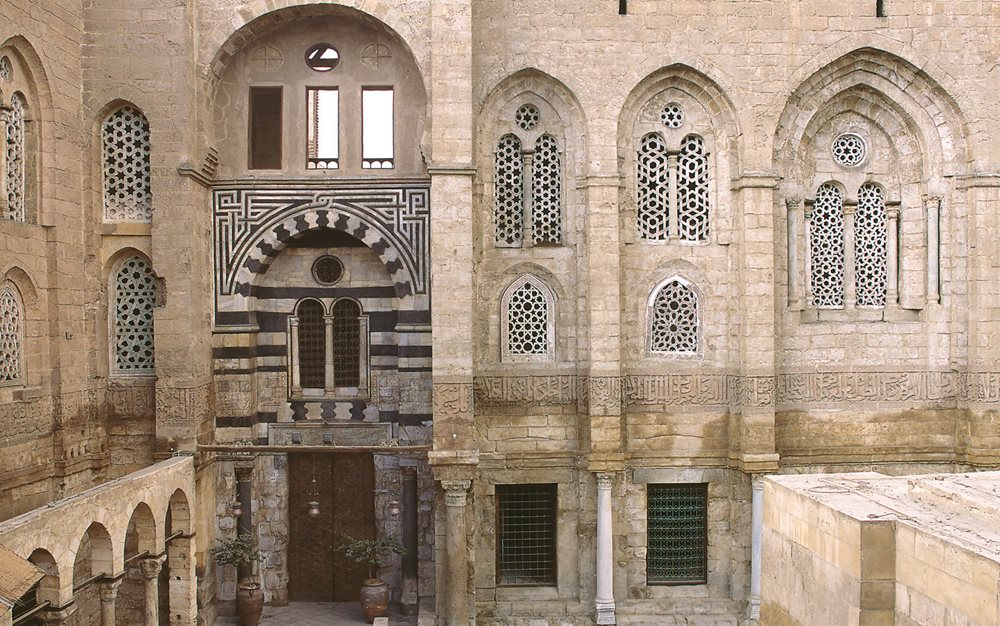
It is within this spirit that one of the most remarkable institutions of human civilization emerged: the Bimaristan, the House of the Sick. From Baghdad and Damascus in the East, to Marrakesh and Fez in the West, these places were not simply buildings. They were expressions of a worldview.
The term itself carries a quiet clarity. Bimar means the sick, and stan means place. A place for the sick. Simple and complete. Yet what was built was far more than shelter.
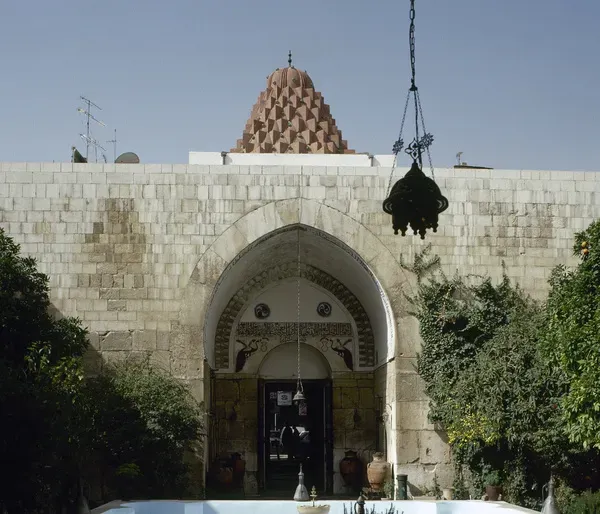
In Marrakesh, toward the end of the twelfth century, Sultan Yaʿqub al-Mansur al-Muwahhidi commissioned a bimaristan that astonished those who saw it. The historian ʿAbd al-Wāḥid al-Marrakushi described it not only in its structure but also in its spirit. It was placed carefully within the city, in a balanced location, as if harmony itself were part of healing. Gardens were planted within its walls, and water flowed through its rooms, cooling the air and soothing the senses. Four pools stood at its center, one carved in white marble, reflecting both light and silence.
Patients were not left in austerity. They were given clothing suited to the seasons, beds prepared with care, and food provided daily without measure. Medicines were prepared on site: syrups, ointments, and treatments for the eye and the body. When the patient recovered, he did not leave empty-handed. If he were poor, he was given what would sustain him until he could stand again on his own. If he were wealthy, his belongings would be returned to him with dignity.
There was no distinction between rich and poor, no barrier between resident and stranger. Whoever fell ill in Marrakesh found a place there. And perhaps the most telling gesture was this: each Friday, after prayer, the Sultan himself would visit, not to inspect, but to ask, “How are you? How is your condition?” Power, in that moment, did not stand above care; it entered it.
This was not an isolated case. From Samarkand to Córdoba, from Diyarbakir to Fez, hundreds of such institutions emerged. In Granada, a bimaristan was established in 1367, and in Tunis, another followed in 1415. In Morocco, they appeared across cities such as Salé, Meknes, Safi, and Rabat, each adapting the same principle: care as a collective responsibility.
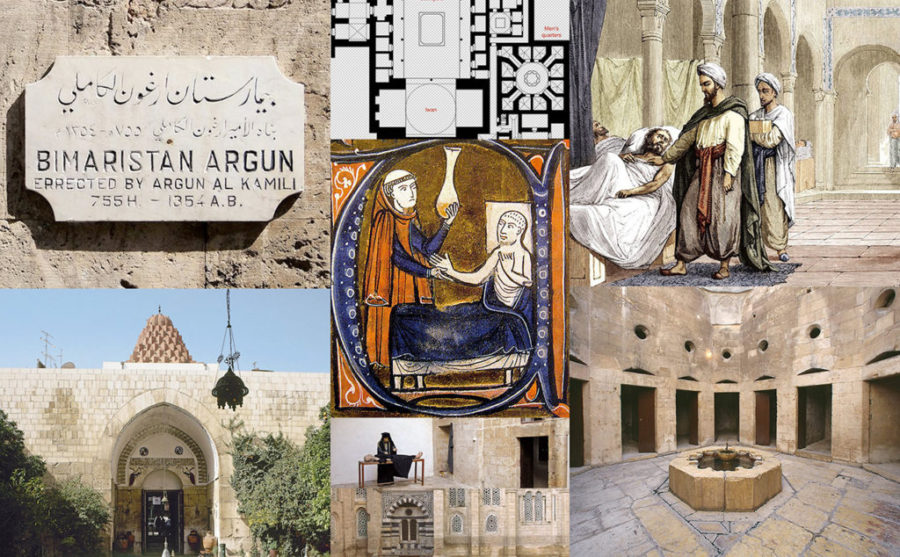
These were not specialized centers limited to one form of illness. They treated the body and the mind alike; internal diseases, surgical conditions, eye diseases, and what we would now call mental health were all received under the same roof.
The roots of this vision go further back. In Damascus, in the early eighth century, the Umayyad caliph al-Walid ibn ʿAbd al-Malik established one of the earliest known institutions of this kind. Treatment was free, provision was ensured, and even public health measures were taken, such as isolating contagious illnesses to protect the community.
In Baghdad, under Harun al-Rashid, physicians like Jibra’il ibn Bakhtishuʿ and Masawayh al-Khuz‘i continued this work, refining medicine, organizing care, and expanding the reach of healing.
What emerges from all of this is not only a history of hospitals. It is a philosophy of care. To heal was not only to treat the body; it was to restore balance, within the individual, within the community, and within the world.
In this sense, the bimaristan was not only a place. It was a reflection of how a civilization understood life: that life is given, that health is entrusted, and that care is a duty.
And perhaps, at its deepest level, it was a quiet recognition of one of the Divine Names: Al-Shāfī, the Healer. For in the end, all healing returns to Him, and all acts of care are but reflections of a generosity that sustains existence itself.
Keep exploring
Discover more stories from Morocco and beyond
Written by
Hamid Mernissi
I was born to travel the world. I am an anthropologist, a Sufi seeker and a student of life.
Comments
No comments yet. Be the first to share your thoughts!
Leave a comment