When the Earth Speaks
On Climate, Responsibility, and the Meaning of Renewal
There comes a moment in the life of a world when the earth itself begins to speak, not through words, but through signs that can no longer be ignored. The rising heat, the shifting seasons, the restless seas, and the increasing violence of storms are not isolated events. They are part of a larger language, one that reflects an imbalance between human ambition and the limits of the natural world.
For decades now, the climate has been moving beyond familiar patterns. Temperatures continue to rise, oceans absorb more heat than they can sustain, and the frequency of natural disasters grows with a force that seems both sudden and inevitable. What was once described as an exception is becoming the norm. Floods, droughts, and storms no longer surprise us; they confront us.
Yet, despite this growing clarity, much of the world remains anchored in old habits. The continued reliance on fossil fuels reflects not only economic dependency but a greater difficulty in letting go of a model that has shaped modern life. It is not simply an energy question; it is a question of how humanity understands its place within the earth.
Science offers measurements, projections, and warnings. It tells us that the coming years will be among the hottest recorded, that oceans are warming in ways that alter weather systems, and that the consequences will be felt unevenly but widely. These facts are essential, but they do not tell the whole story. Behind them lies a more fundamental question: how did we come to live in such a way that the earth must now respond with such intensity?
In this global context, the responses of certain countries are beginning to take on a different meaning. Morocco, for example, is not simply reacting to environmental pressure; it is rethinking its relationship with its own land, water, and energy. Faced with scarcity, variability, and climatic uncertainty, the country has gradually shifted toward solutions that prioritize balance over extraction.
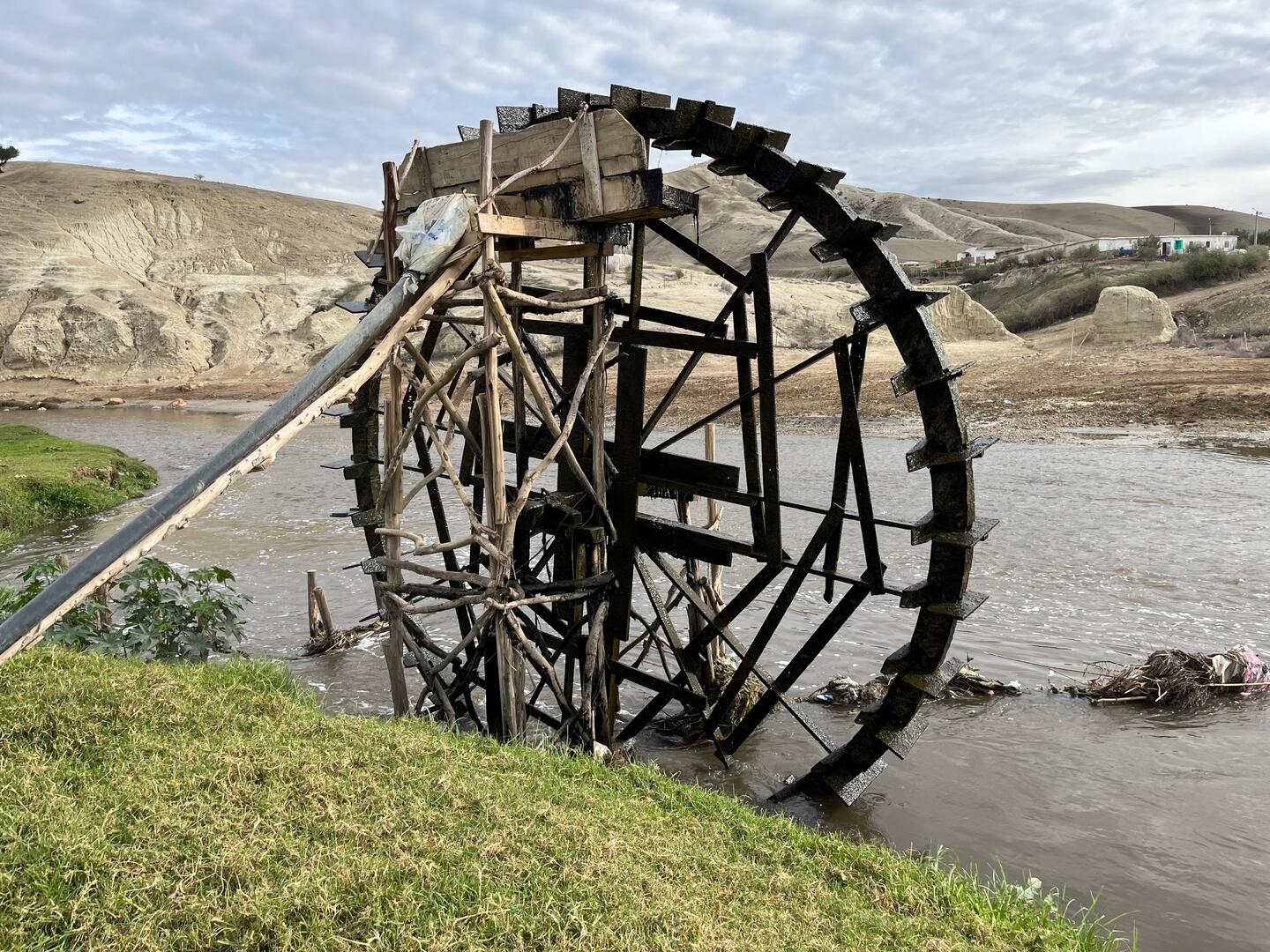
Water, once taken for granted, is now approached with care. The construction of dams, the development of desalination projects, and the management of resources reflect an understanding that water is no longer only a utility; it is a condition of continuity. Likewise, the expansion of renewable energy, solar, wind, and emerging forms such as green hydrogen, signals a transition not only in infrastructure, but in orientation.
These choices are not without complexity. They require investment, adaptation, and a reorganization of how society produces and consumes. But they also reflect a deeper awareness: that resilience is not built by resisting change, but by learning to move within it.
On the African continent, this awareness carries particular weight. For many regions, the effects of climate change are felt more directly, often with fewer resources to absorb the shock. And yet, within this vulnerability lies a potential to imagine development not as repetition of past models, but as a different path altogether. One that draws from local knowledge, from respect for land, and from forms of energy that do not exhaust what they depend upon.
In this sense, the environmental question is no longer only technical or political. It becomes anthropological. It asks how societies organize their lives, how they relate to nature, and how they understand responsibility, not as an obligation imposed from outside, but as something that emerges from within a shared world.
To continue along a purely carbon-based path is not simply to delay change; it is to remain within a way of thinking that separates human progress from the earth that sustains it. The transition toward cleaner energy, therefore, is not only a strategic shift. It is an invitation to rethink what progress means.
Perhaps this is where the true transformation lies.
Not only in the technologies we build, but in the awareness we recover. For the earth does not ask for perfection. It asks for balance.
Keep exploring
Discover more stories from Morocco and beyond
Written by
Hamid Mernissi
I was born to travel the world. I am an anthropologist, a Sufi seeker and a student of life.
Comments
No comments yet. Be the first to share your thoughts!
Leave a comment