Where the Ocean Begins to Speak
On Sea, Power, and the Geography of Becoming
There was a time when the land defined the limits of the world. Borders were drawn in earth, and power was measured by what could be held, cultivated, or defended upon it. Today, something quieter and perhaps more decisive has shifted. The oceans have become the beating heart of the world, carrying not only ships but the invisible threads of connection that bind distant lives together.
Beneath their surface, unseen yet essential, pass the routes of exchange and communication. It is said that most of what the world produces and consumes travels across water, and that even the digital pulse of our daily lives moves silently along the ocean floor. The sea, once perceived as distance, now reveals itself as continuity.
In this transformation, geography is no longer a fixed condition. It becomes a tool, something that can be read, interpreted, and shaped. And anthropology, in its deepest sense, reminds us that every space acquires meaning only through the way human beings choose to inhabit it.
For Africa, this moment carries a particular resonance. Long accustomed to seeing its coastlines as edges, points of departure or vulnerability, the continent is invited to see them differently: as openings. Not openings of exposure, but of relation. Not margins, but thresholds.
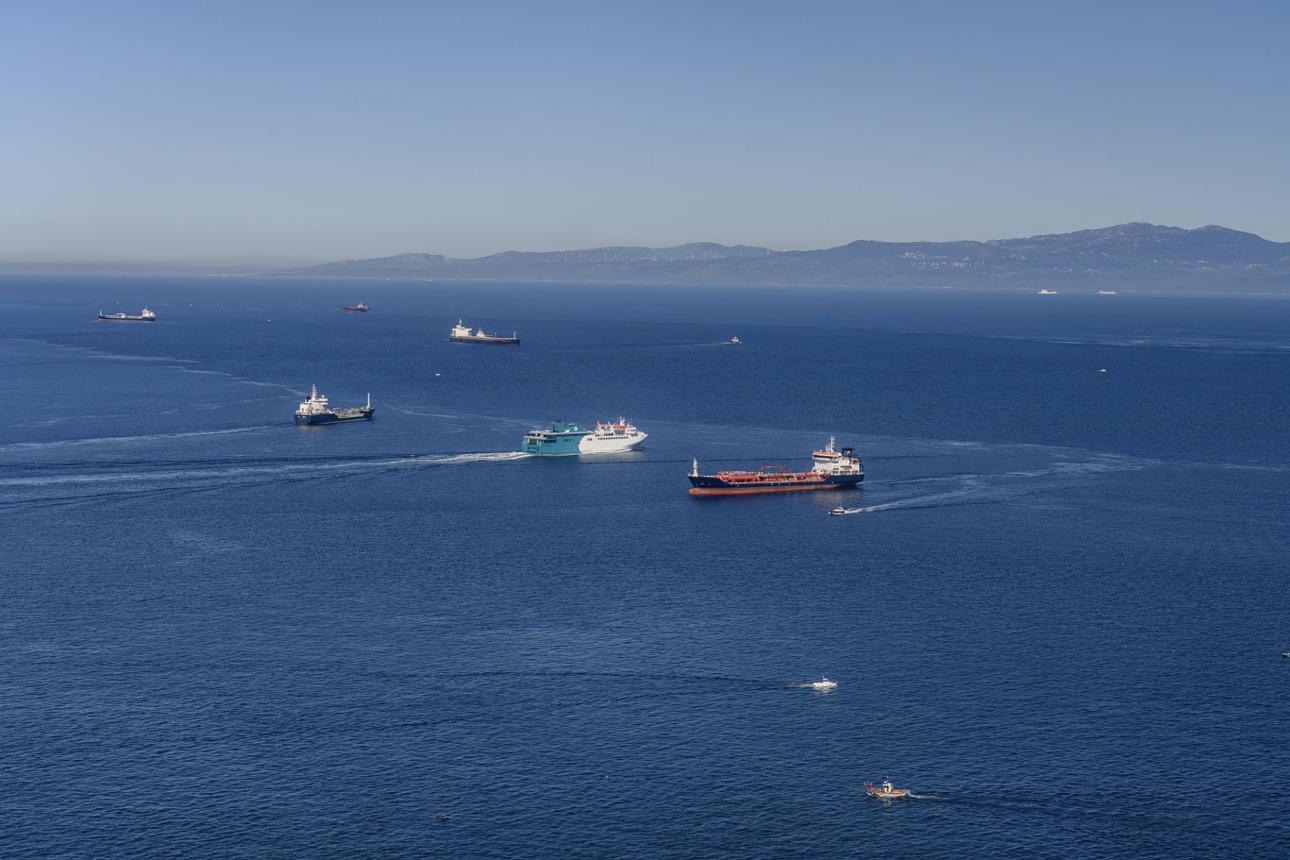
Morocco, standing at the meeting of seas, offers one possible reading of this shift. Its Atlantic horizon is not simply where the map ends, but where another map begins, one that connects rather than separates. Through this lens, the coastline becomes less a boundary than a bridge, extending toward West Africa and the Sahel, inviting circulation rather than isolation.
The language of the “blue economy” emerges here not as a slogan, but as a question: how can the sea be engaged without being exhausted? How can its resources sustain life without being reduced to extraction? To think of the ocean in this way is to move from possession to relationship.
Even the hidden infrastructures, those cables that carry voices, images, and knowledge, remind us that what appears empty is, in fact, full. The ocean is no longer silent; it is a transmission.
And so, a different understanding of sovereignty begins to take shape. Not one defined only by lines on land, but one that extends into movement, into flow, into the capacity to remain present within the currents of the world without being dissolved by them.
This is not a call for domination of the sea, but for alignment with it.
To move from fragile coastlines to living frontiers, from passive edges to conscious thresholds, is perhaps less a political project than a civilizational one.
For in the end, the ocean does not belong to us. But it may still teach us how to belong within a world in motion.
Keep exploring
Discover more stories from Morocco and beyond
Written by
Hamid Mernissi
I was born to travel the world. I am an anthropologist, a Sufi seeker and a student of life.
Comments
No comments yet. Be the first to share your thoughts!
Leave a comment