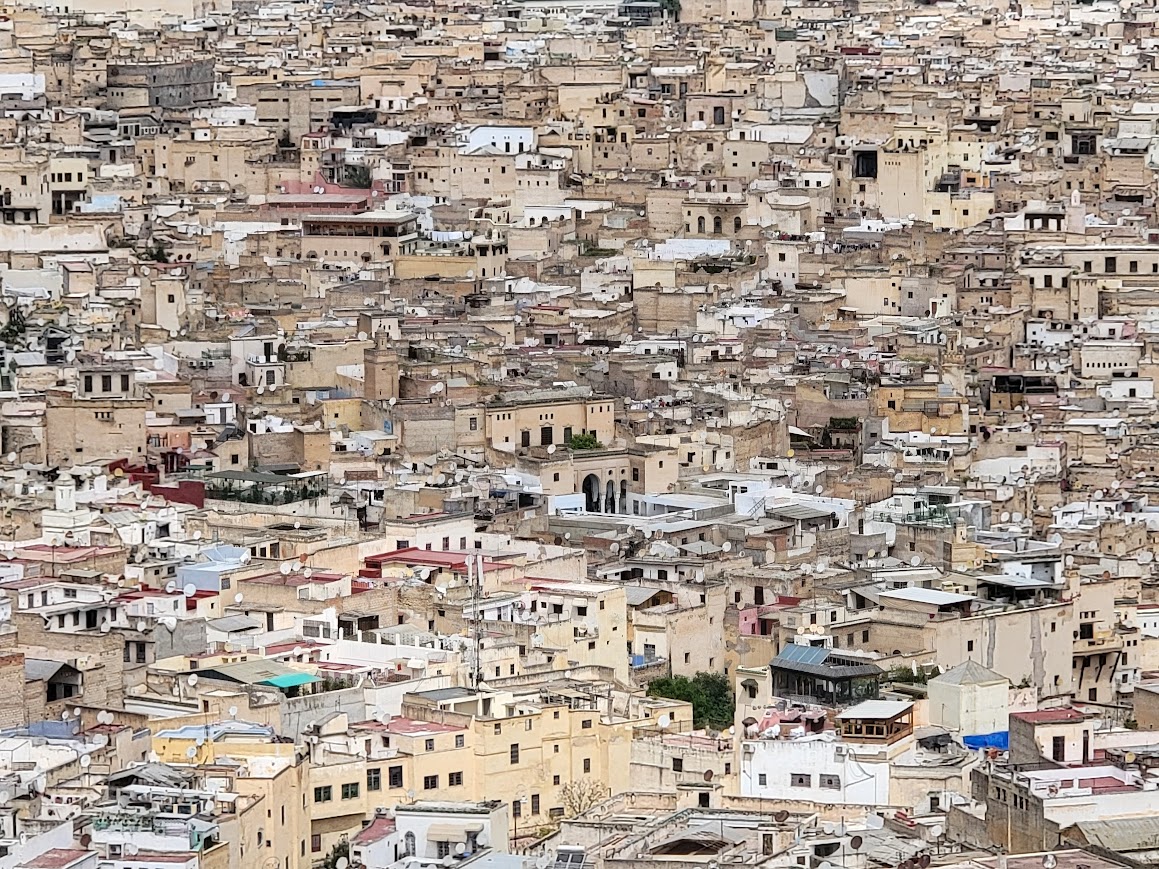
Why I Write About Fez
People often ask me why I write so extensively about Fez.
Some imagine it is because I believe the past was more beautiful than the present. Others suppose I am trying to preserve an old city before it disappears.
Neither is true.
I do not write because I believe yesterday was better than today. Every generation receives its own world, its own questions, its own responsibilities. The Fez of my childhood belongs to its time, just as the Fez of today belongs to another. I have no desire to compare them, for comparison often blinds us to the gifts of both.
Nor do I write in defense of a city.
Cities, like human beings, are living creatures. They grow, they change, they lose some things and discover others. Some of their children leave them, while strangers arrive and make them their own. Change is not the enemy of a city. Forgetfulness is.
I write because I have come to believe that a city is never built of stone alone.
Its true architecture is made of the people who inhabit it.
Its streets are measured not by their length but by the footsteps they have welcomed.
Its walls are not remembered for being old, but for sheltering lives filled with kindness, dignity, work, laughter, sorrow, and hope.
That is the Fez I write about.
Not the city that appears on maps, but the one that continues to live within me.
As I grow older, I discover something curious.
Whenever I begin to describe a house, a face appears.
Whenever I write about an alleyway, I hear footsteps.
Whenever I speak of a doorway, I remember the hand that first led me through it.
Then I understand that I never knew Fez by myself.
I knew it through my father, who taught me that dignity is not a word but a way of standing before the world.
I knew it through my mother, who transformed a house into a homeland simply by the way she cared for those within it.
I knew it through my grandmother, Mi Lalla, who revealed that a market is more than a place of commerce, that bread is more than food, and that a neighbour is a trust before he is an address.
I knew it through my grandfather's quiet footsteps, through the fqih of the msid, through the baker whose oven fed an entire neighbourhood, through the water carrier, the porter, the greengrocer, the washerwomen, the cooks, and through countless men and women whose names history never recorded, yet whose lives quietly shaped mine.
Looking back, I realize that I was never walking through a city.
I was walking through a civilization.
And civilizations are not transmitted by monuments alone.
They are transmitted by human presence.
Today, many of those who formed my childhood are no longer with us.
Their voices have fallen silent.
Their hands no longer open doors.
Their footsteps no longer echo through the alleys of the kasbah.
Yet I cannot say they are absent.
For whenever I prepare mint tea with care, my father is present.
Whenever generosity enters a room before I do, my mother is present.
Whenever I find beauty serving purpose rather than vanity, Mi Lalla is present.
Presence is the quiet form that love takes after those we love have departed.
Perhaps that is why I write.
Not to remember the dead.
Memory belongs to the past.
I write so that their presence may continue to give life to the living.
If one day a young reader who has never walked through the alleys of Fez learns dignity from my father, hospitality from my mother, wisdom from my grandmother, or kindness from one of those forgotten neighbors, then something extraordinary will have happened.
The city will not simply have been remembered.
It will have become present once again.
Then I will know that Fez has accomplished what every great civilization hopes to accomplish.
Not to preserve its stones.
But to continue shaping human beings long after the hands that built it have returned to dust.
That is why I write about Fez.
Not because I belong to its past.
But because its presence still lives within me.
And if these pages carry that presence into another heart, then the city will continue its journey long after both the writer and the reader have gone.
For in the end, what truly endures is neither the wall nor the gate, neither the palace nor the dome.
What endures is Presence.
And perhaps that is the nearest thing to immortality that a human being can leave behind.
Keep exploring
Discover more stories from Morocco and beyond
Written by
Hamid Mernissi
I was born to travel the world. I am an anthropologist, a Sufi seeker and a student of life.
Comments
No comments yet. Be the first to share your thoughts!
Leave a comment